Showing posts with label Islam. Show all posts

Monday, December 15, 2025

'How Beautiful We Were' when 'They Poisoned the World': What I've been reading, 2025 edition

It's been since the pandemic that I wrote an installment of "What I've Been Reading."

With some time to spare in transit recently, I've been catching up on my reading. And with the gift-giving season upon us, I thought it would be fun to share. Maybe I can spark an idea for that hard-to-shop-for person on your list.

Though be warned, books implicating torts are not necessarily best if your aim is to lighten the mood at the family holiday table. Fortunately, there's a range here: nonfiction and fiction, spiritual journey, family epic, fable, and fantasy. Take your pick, and enjoy!

What I've Been Reading, 2025 Edition

Mariah Blake, They Poisoned the World: Life and Death in the Age of Forever Chemicals (2025). Nonfiction/investigative journalism. If you've somehow been feeling good about the world, this book will take the wind out of your sails. The earth is so poisoned with forever chemicals such as PFAS (see John Oliver's 2021 show) that they can be found even in the blood of newborns in remote parts of the world. Innumerable burgeoning health complications, from cancers to strokes, might be linked to our inadvertent consumption of these unnatural poisons. And we're not making a priority of their elimination from the environment, if even we can figure out how to do that. Aggravatingly, the companies that produce this stuff seem to be following the playbook that Big Tobacco wrote in the 20th century, from denial to self-serving "science," to negotiated immunity.

Investigative journalist Mariah Blake, who has written for The Atlantic, among other prominent publications, artfully weaves together the story of transnational industrial impunity with the real lives of people and communities devastated by illness. The book is important, terrifying, and saddening.

Imbolo Mbue, How Beautiful We Were (2021). Fiction/contemporary novel. Imbolo Mbue is a Cameroonian-American writer based in New York. Her second novel, this epic revolves around a family from a fictional African village that is overrun by a large American oil company. Extraction poisons the environment, sickening and killing children and adults. The story sees the family migrate to America and play a part in a revolt back home. One strand of the story traces (realistically unsuccessful) litigation against the oil company under the alien tort statute in the United States. Mbue's writing is beautiful, and that kept me turning pages—as it did in her first novel, Behold the Dreamers (2016).

As much as I wanted to adore this book, I found the story more superficial than insight-bearing. That might be on me; I came to the book already familiar with both the impact of western corporatocracy on Africa and the Big Oil playbook on environmentalism, besides the plot line of alien tort litigation. The book earned ample acclaim, perhaps justifiably for bringing these themes to popular attention. What I did like, and liked most, in the book was the perspective of family elders later in the story. They watched, helpless and with mixed emotions, as younger generations in the States were absorbed into the very culture that had devastated an ancestral homeland the youth did not remember.

Charlie Jane Anders, The City in the Middle of the Night (2019). Fiction/science fiction. I had wanted to read this science fiction book since I heard an NPR review in 2019. The novel tells the story of two different cities, one in the clutch of oppressive governance, and the other dangerously close to anarchy; and of two very different protagonists, coming from different sides of the tracks, as it were. They live on a planet where humans can survive only in the temperate zone between, symbolically, a light side and a dark side. The protagonists have disparate appetites for the revolutionary movement they both are drawn into. Meanwhile, the human population on the planet regards the monstrous indigenous creatures as mere animals. Yet one of the protagonists, thought to be exiled to die, discovers the creatures to be sentient telepaths.

The themes are familiar: the seemingly counterproductive yet lately resonant human affection for authoritarianism; the privileged protagonist who falls for the proletarian revolution; the forbidden love of opposites; and the seeming monster that secrets a superior morality. In the end, I'd say I was disappointed. The book was long, which meant going a long way for trite themes that have been explored better already in science fiction classics.

Eddie Izzard, Believe Me: A Memoir of Love, Death and Jazz Chickens (2017). Nonfiction/memoir. If you've never heard of Eddie Izzard, this book might be a heavy lift. But if like me, you're a fan, and you're keen to understand what makes Eddie Izzard's remarkable mind work the way it does, this book is worthwhile. I listened to the audiobook and recommend that. It's best to hear Izzard tell her own story. (Gender-fluid Izzard prefers feminine pronouns, but says not to get hung up on it.) And because the book is often funny, there's nothing like a comedian's own timing. I like to listen to David Sedaris books for the same reason. But this audiobook is especially good because Izzard ad-libs a bit and artfully incorporates her many tangent footnotes into the flow of the narrative. The audiobook therefore comes off with the same structure as Izzard's stand-up, seemingly meandering yet slyly serpentine. My erudite friend Ethan Dazelle and I saw Izzard live at the Vets, for her "Force Majeure" show, in Providence, Rhode Island, in 2015. The show was as memorable as it was mind-boggling; I wished I had had footnotes then, for all that went over my head.

This is not Izzard's first book. But this book stands apart from her humor books as a deeply personal memoir. The audiobook well captures not only Izzard's sharp wit, but the emotional highs and lows of her life story. The first-person account of how her career came to be is fascinating, especially alongside her coming around to express publicly her sexual identity. Izzard included her television experience with The Riches, which I was pleased to hear. I always have thought that that show, from the 20-aughts, was profoundly underrated; it's often described today as "ahead of its time."

Stories of Izzard's parents and her relationships with them are moving. Curiously from a tort perspective, Izzard's father worked in accounting for BP. That's why Izzard was born in Yemen, a fact I knew, though I did not know why. The family's moves to Northern Ireland, Wales, and then England in Izzard's childhood perhaps give a clue to Izzard's breathtaking consciousness of language, though do not fully explain her easy multilingualism. In the end, nurture does not explain the full measure of Eddie Izzard's peculiar kind of savant; nature must have been a quiet collaborator.

Dave Eggers, The Eyes and the Impossible (2023). Fiction/fantasy. This book by Dave Eggers, whose breakthrough memoir, A Heartbreaking Work of Staggering Genius (2000) was a Pulitzer finalist, won the 2024 Newbery Medal. So that's right: this is a children's book. Technically. My favorite book I read (or listened to) this year, The Eyes is the first-person narrative of a dog, Johannes, who lives in a park. To say more would deprive you of the joy of discovering Johannes's story, and of joining him on his journey of discovery. I will say only that Johannes is never wounded and does not die at the end; my heart just wasn't up for another My Dog Skip or Racing in the Rain, much as I loved those books. 

Heartbreaking Work already demonstrated that Eggers is one of those rare souls endowed with old wisdom, inexplicably defying the bounds of lived perspective. In The Eyes, he puts that wisdom to work to generate a wholly unique fable: the sort of story that can be interpreted and appreciated differently in different phases of a reader's life. I found the book simultaneously amusing and deeply moving; I expect the young cousin to whom I gifted the book will find the same, though for entirely different reasons. I'm always reluctant to describe Heartbreaking Work to someone; rather, I say, you just must read it for yourself. Well, in a fresh and inventive new way, Eggers has done it again, this time for all ages. 

The print version of The Eyes features beautiful illustrations by Shawn Harris. However, I listened to the audiobook, in which the gifted Ethan Hawke, yes, that Ethan Hawke, brought Johannes to brilliant life. A sequel, The Eyes, the Fire and the Avalanche Kingdom, is available for pre-order on January release.

Neil Gaiman, Norse Mythology (2017). Fiction/ancient mythology. Gaiman opens this book by explaining his great affection for Norse mythology and his desire to retell it himself. And that's what the book is, a collection of Norse myths. They're enjoyable stories, and all the better in the characteristically lyrical style that has earned Gaiman a loyal fan base. 

It turns out that most of what I thought I knew about Norse mythology comes from the Marvel universe, and some from Netflix's excellent three-season Ragnarok. Those fictions are good on their own merits, but they perpetuate some popular misconceptions. As Gaiman explains in the introduction to Norse Mythology, one key misconception in the popular imagination is the idealization of Thor. In the real myths, Thor was kind of a meathead. Gaiman's stories capture that. Marvel and Ragnarok get right that Loki is not so much evil as "complicated."  I especially like Gaiman's stories because they fill out the character of Odin. The Allfather is the character who should be idealized, the truly deific hero of Norse mythology, who gets short shrift in contemporary adaptations as past his prime.

Overall, there's much to enjoy here. The Norse myths after all articulate a whole and fully functional world vision. The world of the Norse gods stands on its own and does not require the multicultural contextualization that contemporary fictionalizations are eager to impose.

Nabeel Qureshi, Seeking Allah, Finding Jesus: A Devout Muslim Encounters Christianity (2014). Nonfiction/religion. Obviously, this book won't be everyone's cup (nor three cups) of tea. It's Nabeel Qureshi's intimate firsthand account of his conversion from Islam to Christianity. The book was recommended to me by a Christ-committed cousin who has worked as a missionary in places in the world where doing so is dangerous. A Christian myself, I'm predisposed to appreciate the conversion narrative, and I did. But I'll say that, notwithstanding my predisposition, I enjoyed and appreciated Qureshi's story from a simply human interest perspective. He describes a journey of spiritual yearning and growth; his changing relationships with family and friends in the course of that journey; and along the way, his cultural experience as a Pakistani-American, son of a U.S. Navy officer, especially in the aftermath of 9/11.

Qureshi became a medical doctor, but devoted his life to Christian apologetics. He completed master's degrees at Biola, Duke, and Oxford, and he became a favored speaker on the university circuit, promoting peaceful interfaith dialog. In 2010, he and associates were arrested in Dearborn, Michigan; police alleged they disturbed the peace while answering questions from Muslim teens. A civil rights lawsuit by the arrestees drew exoneration and an apology from the city. Qureshi was working on his doctorate at Oxford when he died of stomach cancer in 2017, at age 34, only a year after diagnosis and two years after the birth of his daughter (Christianity Today).

After Seeking Allah, Qureshi published two books in 2016: Answering Jihad: A Better Way Forward and No God but One: Allah or Jesus?: A Former Muslim Investigates the Evidence for Islam and Christianity. There also is a video study series associated with Seeking Allah, Finding Jesus.

Not directly related to Qureshi's book, but another book in the genre of religious nonfiction that I read this year with a group of Christian academics, which book I do recommend and might be of interest relative to current events, is Peter Beinart, Being Jewish After the Destruction of Gaza: A Reckoning (2025). Now a journalism professor at CUNY, Beinart, who is Jewish, has been a New Republic editor and Atlantic contributor. He writes compellingly on the inevitable incompatibility of Netanyahu war policy with the teachings of Hebrew scripture.

Happy reading, and happy new year. Maybe humanity will do better in 2026. Nothing is impossible.

Thursday, July 7, 2022

'Sudanese Bubba' will show you Sudan

You might not even remember it, but for a short time in the fall of 2020, we thought the pandemic was over. We were just too cute.

Wrong as we were, I went to Sudan then. And there I met a spectacular person called Salma EL-Sheikh, who smoothed my way around the country.

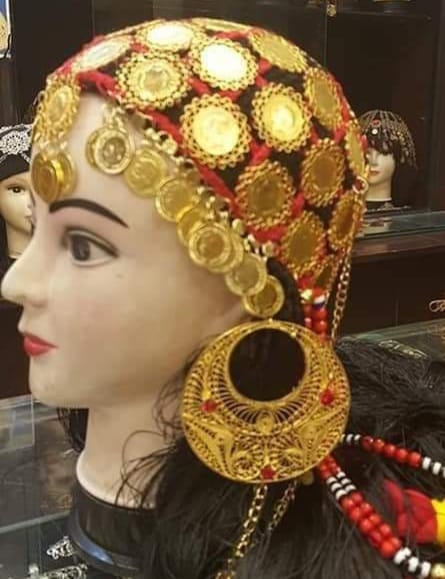
Well Salma is doing her part to drag the world kicking and screaming out of the pandemic, and she now has her own tourism company, Sudanese Bubba. The name "comes from our Sudanese jewelry (Gamar Bubba), moon–shaped golden earring (Gamar Boba)," Salma explains. "Kind of earrings women used to wear at the ancient time, until this moment."

I receive absolutely nothing but a karmic re-balance when I tell you, Salma has my absolute and unqualified recommendation.

Local kids atop Jebel Barka (CC BY-NC-SA 4.0 RJ Peltz-Steele)
Sudan is a stunning place. Its pyramids and ancient sites are magical. You will find yourself scrambling up and over remote dunes to see the next marvel with a feel of wild intimacy that is unknowable in well trampled tourist traps (I'm lookin' at you, Cairo).

Sudan likewise offers a fascinating ethnographic and political experience. Its pioneering efforts to mix Islamic and western law into a republican formula, and its fraught relationships with neighboring South Sudan and Ethiopia all amount to a nation that is very much a work in progress. 

For all the range of experience on offer, my fondest memory is sitting with friends and locals on crates in a Khartoum street at the serving station of "our tea lady."

Let Salma help to make your memories of Sudan!

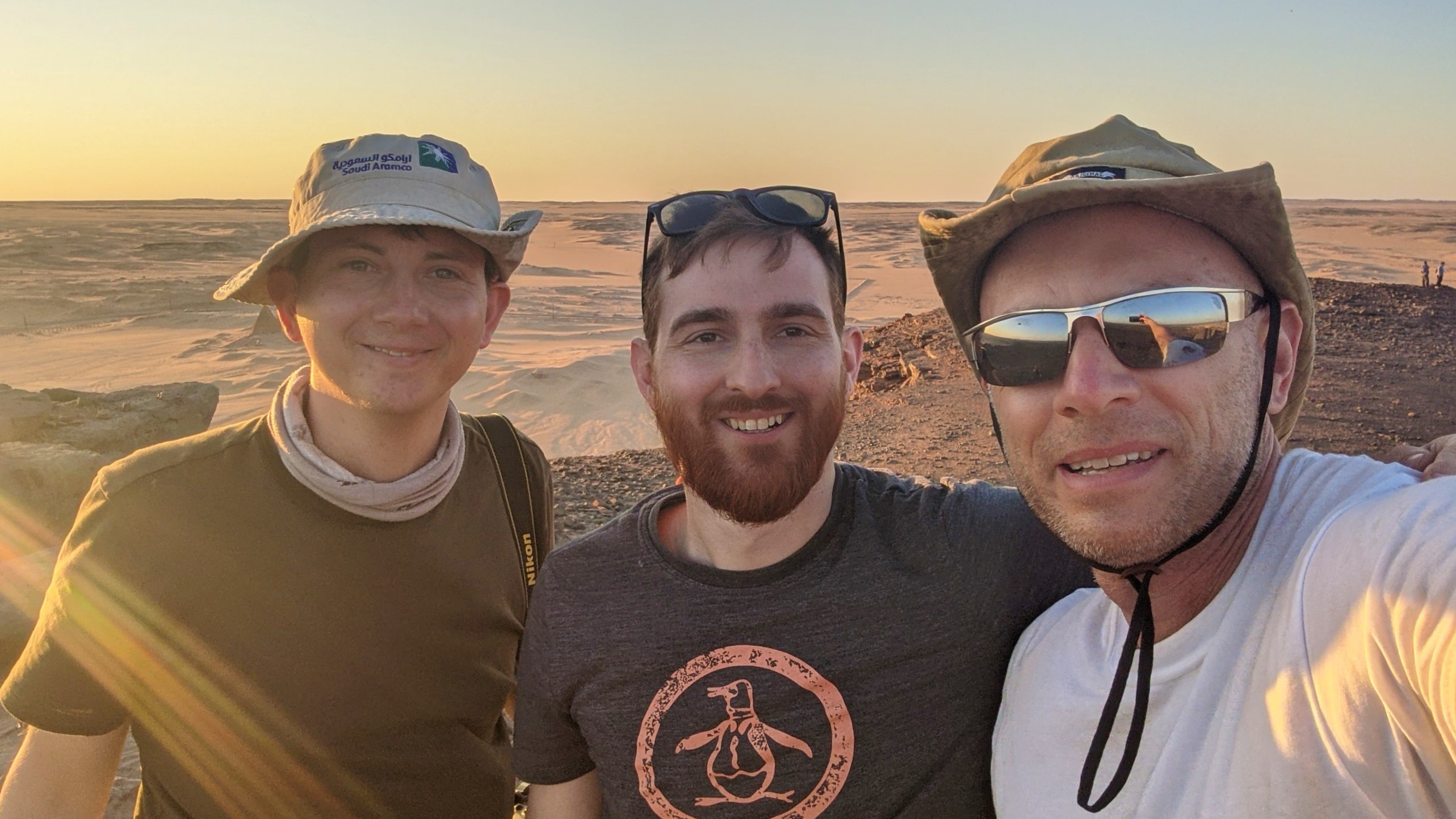
Me and my mates on the road in Sudan (CC BY-NC-SA 4.0 RJ Peltz-Steele)


Saturday, April 24, 2021

Experts enrich comparative law class

Jarosiński
Teaching Comparative Law is everything that makes teaching great.  It's an impossible job, because no one is expert in law the world over, so the course can be daunting to teachers and students alike.  But the challenge is best undertaken as an opportunity to explore.  The joy of teaching Comparative Law for me and my wife, who serves as a law librarian embedded in the course, is that every time, current events and our students' range of interests lead us down new paths.

We wrestle with the problem of what we don't know by consulting experts.  This semester, as in past semesters, we were privileged to have had our class enriched by the knowledge and experience of some stars in legal practice and academics.  In order of appearance...

Liu
Attorney Wojciech JarosiÅ„ski, LL.M. (on this blog), of the Maruta law firm, stayed up late to join us from Warsaw, Poland.  To give us the perspective of a lawyer working in the civil law tradition, he led the class in examining judicial reception of a U.S. punitive damages award in Poland, and then in considering common law and civil law differences in the context of transnational contracting.

Professor Chenglin Liu, St. Mary’s University School of Law, joined from post-freeze Texas to talk about the Chinese response to covid-19.  Professor Liu wrote about the Chinese response to SARS in 2005 in a work that the pandemic rendered newly salient.  A fellow torts teacher, Professor Liu also indulged student questions around U.S. states' suits against the PRC and the implications for Biden Administration diplomacy.

Reda
Professor Danya Reda, UMass Law, treated our class to an introduction to Islamic Law.  Also a fellow torts teacher, Professor Reda teaches an upper-level class on Islamic Law.  Before returning to the United States full time, Professor Reda taught at Peking University School of Transnational Law. Her research examines court reform in global perspective.

Mnisi Weeks
Professor Sindiso Mnisi Weeks, UMass Boston, led the class in a lively discussion of South Africa.  She generously shared her latest research findings on marriage and land rights in customary and contemporary law.  Besides a doctoral degree from Oxford, Professor Mnisi Weeks holds a law degree from the University of Cape Town, home to the renowned Centre for Comparative Law in Africa.  She serves UMass Boston in the School for Global Inclusion and Social Development.

Wortham
Professor Leah Wortham, Columbus School of Law, Catholic University of America, joined us to talk about the unfolding crisis over judicial independence in Poland.  With Professor Fryderyk Zoll, Jagiellonian University, Professor Wortham published the definitive treatment of the subject in 2019.  The matter has become only more complicated and more concerning, both within Poland and between Poland and the EU, in the years since.

Our thanks to Attorney JarosiÅ„ski and Professors Liu, Reda, Mnisi Weeks, and Wortham for contributing to a stellar semester's experience.  Watch this blog for a report in May on the students' final papers.

Thursday, December 3, 2020

Tort liability brakes U.S. policy shift on Sudan, marks crossroads of past, future where Africa meets Arabia

Street corner in the Arabian Market district of Khartoum
(RJ Peltz-Steele CC BY-NC-SA 4.0)

With economic sanctions exacting an intensified toll amid the pandemic and humanitarian crises fraying the peace at political borders, 40 million people in the East African Republic of Sudan may hope that long awaited normalization of relations with the United States will bolster stability and produce prosperity.  Meanwhile, in Washington, American tort claims have thrown a wrench into the diplomatic works.

Smaller Sudan after 2011 (LouisianaFan CC BY-SA 3.0)

Unending War

Before its 2011 division into north and south, Sudan was the largest country in Africa.  Its location is strategically important.  Sudan borders Libya and Egypt to the north, the lifeline of the Nile flowing into the latter.  The country's Red Sea coast positions Port Sudan opposite Jeddah and Mecca.  Chad and the Central African Republic (CAR) sit to the west, and Eritrea and Ethiopia to the east—where more than 40,000 Ethiopian refugees have fled conflict and now strain Sudan's thin resources.  Tumultuous northern regions of the Democratic Republic of the Congo (DRC) and Uganda, the latter yielding the Nile, lie in reach of South Sudan's capital, Juba, along with a disputed stretch of border with Kenya.

At last abandoning imperial ambition in 1953, the British left Sudan to the tempest of regime rise-and-fall that tragically characterized post-colonial power vacuum in Africa.  The country declared itself independent in 1956, but for a quarter century, no one form of government would stick.  An Islamic state brought about some political consistency in 1983, but plenty of ills, too: reigniting civil war between north and south, and paving the path of three decades' dictatorship and an abysmal human rights record under President Omar al-Bashir, from 1989 to 2019.

Part of embassy bombing memorial in Dar es Salaam
(RJ Peltz-Steele CC BY-NC-SA 4.0)
Relations with the United States went from bad to worse after Sudan backed Iraq in the 1990-91 Gulf War.  Osama bin Laden took up residence in Khartoum for five years at that time.  He built a favorable reputation for philanthropy by building legitimate businesses and financing infrastructure projects, such as the main highway, named for him, linking Khartoum to Port Sudan.  In 1993, the United States listed Sudan as a state sponsor of terrorism.  Under U.S. pressure, Sudan expelled bin Laden in 1996.  But Sudan was not spared blame when al-Qaeda bombed the U.S. embassies in Tanzania and Kenya in 1998, killing 224 people, including 12 U.S. citizens, and injuring thousands.  U.S. retaliation included a cruise-missile strike against a Khartoum chemical plant—unfortunately and very likely a target accused erroneously of complicity in chemical weapons manufacture.

Ironically, the bin Laden-orchestrated terror attacks of September 11, 2001, set Sudan and the United States on a winding road of fits and starts toward reconciliation.  U.S. President George W. Bush recognized the need for American allies on the East African doorstep to the Middle East.  U.S. policy leveraged austere sanctions to incentivize Sudanese cooperation in counter-terrorism, and the Bashir regime was supportive.

Sudan needed help, too.  The civil war between the Islamic government in Khartoum and the Sudan People's Liberation Army (SPLA), started in 1983, had never ended.  The exhausting conflict, which ultimately cost more than 2 million civilian lives, was dragging into one of the longest civil wars in modern history—besides that it was really a sequel to the never-quite-resolved first Sudanese civil war of 1955 to 1972, another tragically typical consequence, in part, of arbitrary colonial political borders.  Multi-national diplomatic interventions helped at last to draw the war to a close in 2005.  The peace agreement led to the secession of South Sudan in 2011, a development that seemed promising at the time, but since has seen the two states teetering ceaselessly on the brink of combustion.

A spellbinding sampling of the human toll of the civil war can be found in Dave Eggers's What Is the What: The Autobiography of Valentino Achak Deng (2006).  Spanning events from 1983 to 2005, the book is an artfully novelized memoir of a real child refugee among Sudan's "lost boys."

In 2017, the Obama Administration further loosened sanctions on Sudan.  A coup in 2019 sent Bashir from office the same way he came in, and in 2020, Sudan reconstituted itself as a secular state.  Al-Bashir, 76, is now in prison for corruption.  Marking a significant policy reversal, the government has signaled that it might be willing to turn Bashir over to the International Criminal Court for prosecution in connection with the genocide in Darfur during the second civil war.  In October, the Trump administration moved to clear the way for U.S. businesses to reenter Sudan, bargaining the country's de-listing as a state sponsor of terrorism in exchange for Sudanese recognition of Israel.  The administration was accused of too-little-too-late effort to bolster its foreign policy portfolio in the run-up to the 2020 election, but, at this point, the end means more than the motive.

Persistent Perseverance

In short order, Sudan has transformed from war-torn religious state, ruled by a dictator accused of crimes against humanity, to secular constitutional democracy, pivotal in Middle East peace and primed for western commercial investment.  In other words, Sudan might be in the midst of a remarkably rapid transition from paradigmatic problematic state to African success story.

View of Khartoum and the Nile from Corinthia observation level
(RJ Peltz-Steele CC BY-NC-SA 4.0)
Long acquainted with the hardships of war and sanctions, the Sudanese have persevered, developing a resilient infrastructure and an enviable standard of living, especially relative to neighbors such as the CAR, the DRC, and Eritrea.  Sudanese teens wield smartphones in the dustiest of wayside villages.  Sudan has oil and refining capacity, though the division of natural resources between north and south remains a key cause of simmering contention.  The Khartoum skyline is dotted with structures infamously financed by deliberate defiance of sanctions.  Representative is the Corinthia Hotel: opened in 2008, the oval-shaped building is called "Gaddafi's egg," because Libya paid for its €80m construction.

Wayside fuel and rest area, Shendi-Atbara Road, Al Buqayr
(RJ Peltz-Steele CC BY-NC-SA 4.0)

At present, Sudan has one arm tied behind its back.  Trucks sit idle in fuel queues.  Western credit cards don't work; cash is king.  For better and worse, local products, mostly MENA-manufactured, substitute for the usual globalized glut of soda and snack options in the convenience stores, excepting the universe's inexplicably irreducible constant, Coca-Cola.

If sanctions go away, an energizing flow of auto parts, industrial equipment, transnational banking services, and development of telecommunication and physical infrastructure will irrigate Sudan's thirsty landscape.  The new constitutional government will be boosted to a threshold on prosperity unprecedented in the nation's history.  Already in June, the UK announced a £150m commitment to ease democratic transition and coronavirus impact by combating inflation and poverty.  Sudan unbound stands poised to achieve African development in a region that's long been starved of a win.

But There's a Hitch

Tort liability in U.S. courts is presently a sticking point in negotiations over normalization of U.S.-Sudanese relations and the entry of American enterprise in Sudan.  In 1996, Congress amended the Foreign Sovereign Immunities Act (FSIA) to allow civil lawsuits against foreign state actors for support of terrorism.  Survivors and families of victims of the 1998 embassy bombings sued Sudan in 2001.  The lawsuits floundered in the 20-aughts amid confusion over what plaintiffs, defendants, and causes of action Congress intended to authorize.  In 2008, Congress clarified the law on those questions and revived the earlier suits.

Subsequently, plaintiffs, numbering more than 700, won an award in federal court of $10.2bn, including $4.3bn in punitive damages.  The D.C. Circuit struck the punitive damages, doubting that Congress intended to authorize punitive recovery retroactively.  In May 2020, in Opati v. Republic of Sudan, the U.S. Supreme Court disagreed, vacating the striking of punitive damages and remanding for the lower courts to reconsider.  Litigation questions remain on remand.  The defense might yet challenge the constitutionality of the retroactive authorization of punitive damages, and it's not clear whether Congress intended foreign plaintiffs to be eligible for punitive awards.  Still, the massive compensatory award stands ripe for harvest.

Sen. Schumer in October (Senate Democrats CC BY 2.0)
All that litigation might, however, amount to naught if Congress acts again.  As a condition of the current agreement over sanctions and Israel, Sudan wants free of the Opati judgment.  In October, the State Department indicated willingness to negotiate immunity for Sudan against liability for past acts.  But that immunity would require another change of law, and Congress is not yet on board.

According to a report in Tuesday's New York Times, Sudan has offered a settlement of $335m, undoubtedly a more realistic number than multiple billions.  But Sudan has threatened to exit the agreement in whole if Congress doesn't authorize immunity by year's end.  Deadlocked legislators are trying to broker a compromise through a military spending bill in these first weeks of December.  To the displeasure of some in Congress, the working proposal would compensate U.S. citizens naturalized subsequently to the 1998 attacks less than those who were citizens at the time—working a de facto racial disparity.

Even if the 1998 claims can be resolved, a bigger hurdle looms in the prospect of blanket immunity-to-date for Sudan.  While Sudan did defend the embassy-bombing lawsuits on grounds of FSIA interpretation, it has not responded to the legal claims of, The Hill estimates, about 3,000 family members of September 11 victims who blame Sudan for bin Laden's five-year safe harbor there.  According to the New York Times story, those plaintiffs have the support of Senate leader Chuck Schumer (D-NY) to see that their claims are not extinguished.  It seems unlikely that a closely divided Congress would have any appetite to favor foreign tranquility over September 11 victims, no matter how much U.S. businesses are chomping at the bit to trade in Sudan.

Local heroes (with a smartphone) atop Jebel Barkal
(RJ Peltz-Steele CC BY-NC-SA 4.0)
Last Week in Sudan

Here in the United States, if we hear about Sudan, it's likely to be in the context of civil war atrocities, the human rights abuses of the Bashir regime, or Middle East tensions.  Yet last week in Sudan, I saw little evidence of those worldly matters.  On the roads of Khartoum, in the markets, and in the countryside, I found only a gracious and warm people, a rich Nubian cultural tradition, and a stunning archaeological record of our shared human heritage.

Your interpid blogger at the Nuri Pyramids
(Steven Mueller CC BY-NC-SA 4.0)

Both of those views, the ugly and the beautiful, the grim and the genial, are Sudan.  We disregard the former at our hazard.  But to disregard the latter, we risk much more.

Sudan is the beating heart of the African continent.  Sudan will not forever be deterred by colonial legacy and the politics of aging superpowers.  However we manage to balance redress for past wrongs with a way forward, America will have to decide how to be a part of Sudan's future.  The only alternative will be to join the crumbling desert relics of Sudan's past. 

UPDATE, Dec. 13, 2020: See Conor Finnegan, Trump admin offered $700M to 9/11 victims to save Sudan deal, ABC News, Dec. 11, 2020.  UPDATE, Dec. 20, 2020: Sudan's Listing as Sponsor of Terrorism Ended by US, BBC, Dec. 14, 2020.

Thursday, October 8, 2020

Texas indictment surfaces problem of elected prosecutors; First Amendment protects Netflix film

Actor, model, and District Attorney Lucas Babin
(Steve Stewart CC BY 4.0)
A Tyler County, Texas, grand jury has indicted Netflix for lewd depiction of TV girls in the French film, Cuties (2020).  Sadly, the indictment says more about Texas and American criminal justice dysfunction than about Netflix or contemporary media.  

The film plainly is protected by the First Amendment, rendering the indictment more political stunt than serious legal maneuver.  I wasn't going to watch Cuties, but now I feel like I should, so score one for Netflix, nil for District Attorney Lucas Babin.  Or, I should acknowledge, this might be good campaign fodder for an elected D.A. in East Texas, so it's win-win, minus transaction costs.  

Using the criminal justice system as a means to political ends is a deeply disturbing phenomenon; John Oliver featured the issue in 2018 commentary on Last Week.

Besides being an attorney, Babin is himself, or was, an actor and a model.  His father is dentist and U.S. Rep. Brian Babin (R-Tex.).

The September 23 indictment (image from Reason) relies on Texas Penal Code § 43.262, Possession or Promotion of Lewd Visual Material Depicting Child.  The statute reads:

(b) A person commits an offense if the person knowingly possesses, accesses with intent to view, or promotes visual material that:

     (1) depicts the lewd exhibition of the genitals or pubic area of an unclothed, partially clothed, or clothed child who is younger than 18 years of age at the time the visual material was created;

     (2) appeals to the prurient interest in sex;  and

     (3) has no serious literary, artistic, political, or scientific value.

The latter conjunctive element (3), lacking in serious value, is a typical savings provision meant to bring the law into conformity with the First Amendment, which certainly protects the film.

Promotional image of Cuties French release
Cuties, or Mignonnes in the French original, is a 96-minute drama about a Senegalese-French girl coming of age in contemporary Paris.  She struggles to reconcile her conservative Muslim upbringing with the popular culture of her schoolyard peers in the social-media era.

A Sundance 2020 award winner in dramatic world cinema, the film was written and directed by Parisian born Maïmouna Doucouré, herself of Senegalese heritage.  In a September 15 op-ed in The Washington Post (now behind pay wall), Doucouré wrote:

This film is my own story. All my life, I have juggled two cultures: Senegalese and French. As a result, people often ask me about the oppression of women in more traditional societies. And I always ask: But isn't the objectification of women's bodies in Western Europe and the United States another kind of oppression? When girls feel so judged at such a young age, how much freedom will they ever truly have in life?

The sexualization of the girls in the film is already familiar in the life experience of an 11- or 12-year-old, Doucouré further wrote. Still, a counselor was on set, and French child protection authorities signed off on the film.

Some of the flap over Cuties, and probably precipitating the Texas indictment, was Netflix's initial promotion of the film with an image of the child stars in sexually suggestive outfits and pose (see Bustle).  Netflix apologized publicly and to Doucouré and withdrew the portrayal.

Here is the trailer for Cuties.

The case is State v. Netflix, Inc., No. 13,731 (filed Tex. Dist. Ct. Tyler County Sept. 23, 2020).

Tuesday, September 25, 2018

The Adventures of Mass. App. and the 700 Gold Coins

                                                       pnging.com CC BY-NC 4.0
The Massachusetts Appeals Court dove into foreign law and comity today, leaving "700 gold coins" in the possession of an Iranian divorcée.  The case is No. AC 16-P-1131 (Mass. App. Ct. Sept. 25, 2018).

Family law is not my area, but this decision from Mass. App. presented a modest if compelling problem in comparative law.  The divorce of husband and wife precipitated litigation in Iran over the dissolution of the marriage contract and also in Massachusetts over the division of property.  Central in the dispute were "700 gold coins," representing a mahr--a gift from groom to bride in Islamic marriage tradition.

I put "700 gold coins" in quotation marks because I don't think there need actually be 700 gold coins.  The mahr represents a quantifiable asset that is expected to grow in value with the duration of the marriage, thus, at least in theory, providing a divorcée with a time-commensurate award in case of separation.  According to the husband's testimony in Massachusetts court, in event of divorce, the wife may retain the entirety of the mahr, but may receive nothing more.

Despite that testimony, the husband contested award of the mahr in Iranian courts.  He lost at two levels, in trial court and intermediate appellate court in Tehran.  He told the court in Massachusetts that he was appealing to the Supreme Court of Iran.

Meanwhile the trial judge in Massachusetts divided the couple's property assets within U.S. jurisdiction more or less evenly, faithfully to Commonwealth law.  The husband showed that an inherited property in Tehran was wholly under the control of, and generating income for, the husband's mother, so the property was left with the husband as not entwined with the marriage.  But the court awarded the wife an equal share of the appreciation of the property over the course of the marriage.  Other assets were divided evenly.  The court regarded the mahr as an asset of the marriage, so divided it equally as well.  On that latter point, the appellate court reversed.

The principle of comity in international law demands that Massachusetts respect the judgment of a foreign court if it does not run contrary to domestic public policy.  The appellate court found no public policy imperative that would warrant disregard for the Iranian court ruling on the disposition of the mahr.  In the view of the Iranian lower courts, the mahr was the sole property of the wife.  Even if the Iran Supreme Court reverses on that question, no American public policy principle would be offended.  So the Massachusetts trial court abused its discretion in substituting its judgment for that of the Iranian courts on the mahr.  All other rulings of the trial court, including the ruling on the appreciation of the Tehran property, were affirmed.

The courts seemed able to resolve the question presented without expert testimony on Iranian law.  The appeals court relied on the treatment of mahr in a prior New Jersey decision.  Were it necessary, rule 44.1 of both federal and commonwealth rules of civil procedure allows the unusual step of expert evidence on questions of law.  That's fun, because legal scholars get to be experts in court, like experts from other disciplines.  Usually we're relegated to the sidelines.

The opinion was written by Associate Justice Sydney Hanlon, a graduate of Brown and Harvard Law.  Her skills include training for court personnel on dealing with domestic violence, training she has given in central and eastern Russia, as well as the United States, as part of rule-of-law work. 

The court's decision on comity comes at a curious time, with the United States tuning up sanctions on Iran and the EU negotiating with Iran to the express end of undermining U.S. sanctions.  Of course domestic claims playing out against the backdrop of U.S.-Iranian foreign policy is no new thing in American tort law.  See The Adventures of Tort-tort and the Frozen Assets.