Showing posts with label Africa. Show all posts

Monday, May 11, 2026

In row with Zambia, NGO abruptly cancels world human rights conference, points to Chinese interference

A gateway near Lusaka's Kenneth Kaunda International Airport
marks Zambia independence from Britain in 1964.

RJ Peltz-Steele CC BY-NC-SA 4.0
Blaming interference by the Chinese and Zambian governments, global digital rights organization Access Now canceled the 2026 meeting of RightsCon, one of the largest human rights conferences in the world, on April 29, just days before thousands of delegates were to converge on host city Lusaka, Zambia.

I was already in southern Africa for RightsCon when the announcement came. I thought it prudent not to write about the cancellation until I left Zambia. I am home in the United States now.

Those of in Lusaka naturally were in contact with one another. We agreed that our exchanges of information would be subject to the Chatham House Rule, and furthermore, that we would be non-specific about the nature—time, place, medium, scope—of our communications. Accordingly, there is information in this account that is not attributed but comes from reliable sources.

RightsCon returns to Africa 

RightsCon has been a gathering place for international leaders, thinkers, and organizations to discuss digital rights policy, including internet censorship, electronic surveillance, and technology ethics, almost every year since the first conference convened in Silicon Valley in 2011. Also founded in California, in 2009, global nonprofit Access Now takes the lead in organizing RightsCon, with tech companies and allied civil society organizations around the world contributing expertise and resources.

I was in Tunis, Tunisia, for the first RightsCon meeting in Africa, in 2019; I wrote about it here at The Savory Tort. The 2026 meeting in Lusaka, the capital of Zambia, was to mark the first meeting of RightsCon in sub-Saharan Africa. Access Now anticipated 2,600 in-person participants in Lusaka, besides 1,100 more online, representing 150 countries and 750 organizations in more than 500 sessions.

Generally, large, world conferences of any kind are exceedingly difficult to locate in sub-Saharan Africa, outside of South Africa, if only because of infrastructure limitations—airline routes, meeting space, accommodations, food preparation, security. The challenge is often cited as a chicken-or-egg factor in stalled African development, as the lucrative likes of business and medical conferences pass on the region even when they have development on the agenda.

Add to the mix the human rights focus of RightsCon, and its 2026 location amid the fragile democracies, such as Zambia's, in central Africa, and the conference was set to be an especial boon to the region. RightsCon Zambia was conceived to be a game changer, to show what could be done.

The RightsCon ethos condemns rights-oppressive digital manipulation such as internet shutdowns, which are an authoritarian go-to in regimes across sub-Saharan African (e.g., The Guardian). RightsCon also prizes equity in online participation, thus embracing expression by and about women and minority groups, including the LGBTQ community. That's sensitive subject matter in a region in which child marriage, female genital mutilation, and criminalization of same-sex relations are live, hot-button issues.

Access Now was keenly aware of all of these challenges and worked hard to coordinate RightsCon in constant collaboration with Zambian officials, since a first meeting in 2024. More than a few rights activists were critical of Access Now, preferring to eschew sub-Saharan Africa on the theory that the economic advantages and favorable press of a global human rights conference should be withheld from the region.

I rather agree with Access Now that the social and economic opportunity of an event such as RightsCon should be positioned to counterbalance anti-democratic incentives. After all, civil society organizations that advocate for human rights and the protection of women and minority persons continue working in these countries, placing themselves at grave risk, regardless of whether activists from abroad turn up in solidarity. So better to turn up.

RightsCon 2026 goes south

Access Now described what happened in late April in a detailed May 1 statement. According to the statement: "On April 27, one day after a government press release endorsed RightsCon, we received a phone call from MoTS [Zambian Ministry of Technology and Science] about an urgent issue and were told that diplomats from the People’s Republic of China (PRC) were putting pressure on the Government of Zambia because Taiwanese civil society participants were planning to join us in person."

RightsCon 2025 was held in Taipei, Taiwan. I was there and wrote about the conference here at The Savory Tort last year. The programs I highlighted at that RightsCon covered topics such as Chinese surveillance technology, opportunistic Chinese technology investment in Africa, and the vulnerability to malicious actors of undersea information infrastructure in the Pacific.

I was surprised then that such conversations could happen with impunity in Taiwan, just offshore from watchful mainland China. Now, it seems, they could not, not without consequences.

It wasn't Access Now that first called off RightsCon Zambia. After the MoTS phone call, Access Now sought to open dialog with Zambian officials and Taiwanese delegates. Then, on April 28, Access Now was blindsided by a government announcement that RightsCon was "postponed"—a logistical impossibility. Access Now also "received reports of immigration officers telling participants as they arrived that RightsCon had been cancelled."

In Zambian news outlets, Technology and Science Minister Felix Mutati said that "additional time is required to ensure all preparatory arrangements fully align with national procedures, diplomatic protocols, and the broader objective of promoting a balanced and consensus-driven platform."

The "postponement" was restated in an April 29 press statement by the Zambian Ministry of Information and Media the next day. Information and Media Secretary Thabo Kawana wrote: "The postponement was necessitated by the need for comprehensive disclosure of critical information relating to thematic issues proposed for discussion during the Summit. Such disclosure is essential to ensure full alignment with Zambia's national values, policy priorities, and broader public interest considerations."

Access Now learned through informal channels, it wrote in its statement, that "for RightsCon to continue, we would have to moderate specific topics and exclude communities at risk, including our Taiwanese participants, from in-person and online participation."

To do so would have been antithetical to Access Now and RightsCon's very mission. So Access Now itself then canceled RightsCon and urged delegates to abort travel to Zambia.

China pulls strings

When I first read the information ministry release and its reference to "Zambia's national values," I did not yet know about the role of China behind the scenes. I rather suspected that Zambia was turned off by the friendliness of the RightsCon agenda to expressive freedom for women and the LGBTQ community. No doubt my perspective is colored by my own past research on civil rights in East Africa (presented at a Law and Society conference at the University of Cape Town in 2016). 

I wasn't entirely wrong, though. Zambian discontent with other aspects of RightsCon programming meant that officials did not have to have their arms twisted too hard to nix the conference.

Nearly a quarter of girls in Zambia marry before they turn 18, though, it must be acknowledged, that percentage has fallen more than 15 points in recent years thanks to government efforts. Gay sex is illegal in Zambia and punishable by imprisonment. The LGBTQ community is persecuted by blackmail and criminal prosecution (more at Amnesty International). Needless to say, these matters are not mentioned on Zambia's tourism website.

Another source of contention, which I had not recognized, is labor rights, especially in extraction. Weak regulation and abundant unlicensed operations leave quarry and mine workers, sometimes including child laborers, plagued with accidents, yielding some hundred injuries and fatalities annually, besides social and environmental damage. Every year brings a new horror story—a landslide at an open-pit copper mine in 2023 (AP), a quarry collapse in 2024 (Africa News), a pit collapse in 2025 (IJHub).

Chinese interests moreover are implicated in mining hazards. In 2025, a dam collapse at a Chinese-state-owned mine in the Zambia Copperbelt wrought environmental catastrophe. Fifty million liters of toxic waste poured into rivers that supply more than half of Zambians with water. Mass die-offs of fish and birds were immediate, and Kitwe, a city of 800,000, had to shut off its water supply.

Lawsuits have been brought against mine owner Sino-Metals Leach Zambia, and the long-term environmental impact in the Kafue River Basin is still being assessed. The Kafue River flows south from the Copperbelt through ecologically critical and touristically important Kafue National Park. Sino-Metals promised to compensate victims, but is implicated in covering up the scope of the disaster.

A campaign-season banner in Lusaka touts incumbent achievements.
RJ Peltz-Steele CC BY-NC-SA 4.0
Access Now in its explanation of the RightsCon cancellation fairly chose to emphasize Chinese interference as dispositive, and to gloss over other issues. Rights advocates were concerned, especially after the information minister's reference to "values," that authorities would aim to distract from their subservience to China by scapegoating the LGBTQ community. Such a move is known in the government playbook, as when previous crackdowns on political dissent were willfully mischaracterized as protecting traditional Zambian society from western liberal deviance.

Election season is under way in Zambia with the presidency and legislature in play. Voters go to the polls in August. The cancellation of a conference as large as RightsCon is wreaking adverse economic impact in Lusaka and across the country, in tourism and support-service sectors, not to mention leaving Zambia with an embarrassing black eye among nations. The incumbent president could lose his narrow lead in the polls were the public to come to understand as well that China, author of the Kafue disaster, was pulling Zambia's puppet strings.

Whither America?

When I learned of the RightsCon cancellation, I was not in Zambia, but in neighboring Malawi. Oddly enough, I went to Malawi before RightsCon to have a look at the substantial impact of Chinese infrastructure investment in that country.

I have written here at The Savory Tort before about the dangers to global security of strategic Chinese investment in the developing world, for example, two years before RightsCon Taiwan, in places such as Maldives. I hope to write about what I saw in Malawi later, my experience there being overshadowed now by the RightsCon story. 

Meanwhile, the coincidences piled up when, on April 30, a different story from Zambia broke in international news. Unexpectedly that day, outgoing U.S. Ambassador to Zambia Michael C. Gonzales delivered a farewell speech that sparked a conflagration of domestic debate and intensified discord with Washington. The Lusaka Times described what happened:

What was expected to be a routine diplomatic send-off quickly became a national political flashpoint after Gonzales questioned the credibility of anti-corruption efforts, raised concerns about institutional accountability and warned about governance weaknesses that continue to undermine investor confidence. His remarks landed at a time when political temperatures were already rising and economic frustrations remained deeply embedded among voters confronting high living costs and employment pressures. 

Gonzales was a Biden appointee, but he signed on to the new agenda when Trump went back to Washington. After the radical rollback of U.S. foreign development aid, in statements in 2025 and earlier this year, Gonzales expressed regretful support for the suspension of aid to Zambia for purported reason of the country's inability to corral corruption.

As The New York Times described the situation late last week, Gonzales's remarks came at a critical juncture in negotiation between the United States and Zambia over what "America First" economic relationship will replace the dismantled USAID model. Like China, the United States is eyeing Zambian mineral reserves and, observers allege, seeks to strike a deal on favorable terms of access in exchange for at least a billion dollars in health aid. 

Gonzales denied that mineral access is a bargaining chip in U.S.-Zambia aid negotiations. But a draft State Department memo leaked to The New York Times suggested otherwise. The Times reported plainly in March, "The State Department is considering withholding lifesaving assistance to people with H.I.V. in Zambia as a negotiating tactic to force the government of the southern African country to sign a deal giving the United States more access to its critical minerals."

The U.S. has renegotiated health aid with 20 other African countries, the Times reported, usually upon receiving the nation's commitment to shoulder more of the burden itself on healthcare. Ghana and Zimbabwe walked away from renegotiation. Nations have balked at U.S. demands that they share healthcare data and biological samples, sometimes for longer than the aid term, and without converse guarantees of access to research findings. These issues are at play in U.S.-Zambia negotiations.

Yet the renegotiation with Zambia seems specially to incorporate mineral access, too, according to Times reporting on the leaked draft memo: "[T]he United States is trying to use the deal it is negotiating with Zambia to address a longtime source of frustration: what is sees as China's unfettered access to the country's mineral wealth. Zambia is one of the world's major copper producers, and also has huge reserves of minerals like lithium and cobalt, all of which are key in the green energy transition."

According to Times reporting, some 1.3 million Zambians rely on daily U.S.-funded antiretroviral therapies, besides the country's dependence on U.S. aid to hold tuberculosis and malaria at bay. The United States is threatening cuts on a "massive scale," according to the leaked memo. A Zambian official condemned the equation of mineral access with lifesaving aid, the Times reported—though I saw no public recognition of Zambia's parallel arrangements with China.

On the street in Lusaka, I heard mixed feelings about the U.S.-Zambia row. I expected to hear disappointment and frustration at the termination of USAID and the threatened loss of health aid. But the outrage I heard was directed at Zambians' own government.

Many people I talked to framed their assessments with the experience of family members who depend on aid to live with HIV. Even what would seem a modest cost to a U.S. taxpayer for prescription drugs, mere dollars a day, would put treatment beyond reach for many in Zambia, where median income is about $4 per day.

Though U.S. threats to stop HIV assistance pointed to a deadline in May, Zambians told me that the drugs already are becoming scarce. It's possible that healthcare providers and corrupt officials are hoarding supply.

And therein lies the source of Zambians' frustration. People I talked to agreed with Gonzales and echoed U.S. allegations that aid is improperly diverted by corruption. Characteristically, one man expressed his support for President Trump, saying he liked that Trump "is his own man." Zambians seemed willing to go along with at least economic aid cuts if it would mean an end to corruption and more assistance hitting the ground in the long run.

In retrospect, it makes sense that anti-establishment Trump rhetoric would resonate with African constituents accustomed to self-reliance amid weak public institutions and politicians who promise much and deliver little. Still, I'm not sure an all-access pass for American corporations to Zambian natural resources is going to leave Zambians any better off than they are under the Chinese yoke. 

Zambians I spoke to had little more regard for China. They regarded Chinese investment as having proved self-serving of both Chinese laborers and investors, and having added little to Zambians' economic prosperity. That's pretty much the story on Chinese investment as I've found it elsewhere on the continent. I wonder whether Zambians will be surprised to find that that's now the American strategy, too.

A baobab tree says good night at South Luangwa National Park.
RJ Peltz-Steele CC BY-NC-SA 4.0
Sub-Saharan Africa navigates new world

Persons working on rights issues in and about Africa agreed that the cancellation of RightsCon under these circumstances is a devastating blow to democracy in Africa and the developing world. Conference organizers boldly endeavored to show that it could be done, that sub-Saharan Africa has the maturity and sophistication to take its seat at the table and to join the global dialog on human rights in the technological age. Now the takeaway is confirmation for the naysayers: reinforcement of the dangerous trope that Africa is a backwater, inexplicably mired in underdevelopment. It will be a generation, one activist lamented, before anyone tries this again.

I worry even more about the confirmation of the Chinese foreign policy model. The cancellation of RightsCon at the behest of Chinese political demands, while Zambian natural resources are plundered and human capital exploited—soon by America also?—seems to confirm our global retreat from "the end of history" in western liberalism, and, in its place, a terrifying, seemingly inevitable human tendency to cling to the primacy of might.

Monday, December 15, 2025

'How Beautiful We Were' when 'They Poisoned the World': What I've been reading, 2025 edition

It's been since the pandemic that I wrote an installment of "What I've Been Reading."

With some time to spare in transit recently, I've been catching up on my reading. And with the gift-giving season upon us, I thought it would be fun to share. Maybe I can spark an idea for that hard-to-shop-for person on your list.

Though be warned, books implicating torts are not necessarily best if your aim is to lighten the mood at the family holiday table. Fortunately, there's a range here: nonfiction and fiction, spiritual journey, family epic, fable, and fantasy. Take your pick, and enjoy!

What I've Been Reading, 2025 Edition

Mariah Blake, They Poisoned the World: Life and Death in the Age of Forever Chemicals (2025). Nonfiction/investigative journalism. If you've somehow been feeling good about the world, this book will take the wind out of your sails. The earth is so poisoned with forever chemicals such as PFAS (see John Oliver's 2021 show) that they can be found even in the blood of newborns in remote parts of the world. Innumerable burgeoning health complications, from cancers to strokes, might be linked to our inadvertent consumption of these unnatural poisons. And we're not making a priority of their elimination from the environment, if even we can figure out how to do that. Aggravatingly, the companies that produce this stuff seem to be following the playbook that Big Tobacco wrote in the 20th century, from denial to self-serving "science," to negotiated immunity.

Investigative journalist Mariah Blake, who has written for The Atlantic, among other prominent publications, artfully weaves together the story of transnational industrial impunity with the real lives of people and communities devastated by illness. The book is important, terrifying, and saddening.

Imbolo Mbue, How Beautiful We Were (2021). Fiction/contemporary novel. Imbolo Mbue is a Cameroonian-American writer based in New York. Her second novel, this epic revolves around a family from a fictional African village that is overrun by a large American oil company. Extraction poisons the environment, sickening and killing children and adults. The story sees the family migrate to America and play a part in a revolt back home. One strand of the story traces (realistically unsuccessful) litigation against the oil company under the alien tort statute in the United States. Mbue's writing is beautiful, and that kept me turning pages—as it did in her first novel, Behold the Dreamers (2016).

As much as I wanted to adore this book, I found the story more superficial than insight-bearing. That might be on me; I came to the book already familiar with both the impact of western corporatocracy on Africa and the Big Oil playbook on environmentalism, besides the plot line of alien tort litigation. The book earned ample acclaim, perhaps justifiably for bringing these themes to popular attention. What I did like, and liked most, in the book was the perspective of family elders later in the story. They watched, helpless and with mixed emotions, as younger generations in the States were absorbed into the very culture that had devastated an ancestral homeland the youth did not remember.

Charlie Jane Anders, The City in the Middle of the Night (2019). Fiction/science fiction. I had wanted to read this science fiction book since I heard an NPR review in 2019. The novel tells the story of two different cities, one in the clutch of oppressive governance, and the other dangerously close to anarchy; and of two very different protagonists, coming from different sides of the tracks, as it were. They live on a planet where humans can survive only in the temperate zone between, symbolically, a light side and a dark side. The protagonists have disparate appetites for the revolutionary movement they both are drawn into. Meanwhile, the human population on the planet regards the monstrous indigenous creatures as mere animals. Yet one of the protagonists, thought to be exiled to die, discovers the creatures to be sentient telepaths.

The themes are familiar: the seemingly counterproductive yet lately resonant human affection for authoritarianism; the privileged protagonist who falls for the proletarian revolution; the forbidden love of opposites; and the seeming monster that secrets a superior morality. In the end, I'd say I was disappointed. The book was long, which meant going a long way for trite themes that have been explored better already in science fiction classics.

Eddie Izzard, Believe Me: A Memoir of Love, Death and Jazz Chickens (2017). Nonfiction/memoir. If you've never heard of Eddie Izzard, this book might be a heavy lift. But if like me, you're a fan, and you're keen to understand what makes Eddie Izzard's remarkable mind work the way it does, this book is worthwhile. I listened to the audiobook and recommend that. It's best to hear Izzard tell her own story. (Gender-fluid Izzard prefers feminine pronouns, but says not to get hung up on it.) And because the book is often funny, there's nothing like a comedian's own timing. I like to listen to David Sedaris books for the same reason. But this audiobook is especially good because Izzard ad-libs a bit and artfully incorporates her many tangent footnotes into the flow of the narrative. The audiobook therefore comes off with the same structure as Izzard's stand-up, seemingly meandering yet slyly serpentine. My erudite friend Ethan Dazelle and I saw Izzard live at the Vets, for her "Force Majeure" show, in Providence, Rhode Island, in 2015. The show was as memorable as it was mind-boggling; I wished I had had footnotes then, for all that went over my head.

This is not Izzard's first book. But this book stands apart from her humor books as a deeply personal memoir. The audiobook well captures not only Izzard's sharp wit, but the emotional highs and lows of her life story. The first-person account of how her career came to be is fascinating, especially alongside her coming around to express publicly her sexual identity. Izzard included her television experience with The Riches, which I was pleased to hear. I always have thought that that show, from the 20-aughts, was profoundly underrated; it's often described today as "ahead of its time."

Stories of Izzard's parents and her relationships with them are moving. Curiously from a tort perspective, Izzard's father worked in accounting for BP. That's why Izzard was born in Yemen, a fact I knew, though I did not know why. The family's moves to Northern Ireland, Wales, and then England in Izzard's childhood perhaps give a clue to Izzard's breathtaking consciousness of language, though do not fully explain her easy multilingualism. In the end, nurture does not explain the full measure of Eddie Izzard's peculiar kind of savant; nature must have been a quiet collaborator.

Dave Eggers, The Eyes and the Impossible (2023). Fiction/fantasy. This book by Dave Eggers, whose breakthrough memoir, A Heartbreaking Work of Staggering Genius (2000) was a Pulitzer finalist, won the 2024 Newbery Medal. So that's right: this is a children's book. Technically. My favorite book I read (or listened to) this year, The Eyes is the first-person narrative of a dog, Johannes, who lives in a park. To say more would deprive you of the joy of discovering Johannes's story, and of joining him on his journey of discovery. I will say only that Johannes is never wounded and does not die at the end; my heart just wasn't up for another My Dog Skip or Racing in the Rain, much as I loved those books. 

Heartbreaking Work already demonstrated that Eggers is one of those rare souls endowed with old wisdom, inexplicably defying the bounds of lived perspective. In The Eyes, he puts that wisdom to work to generate a wholly unique fable: the sort of story that can be interpreted and appreciated differently in different phases of a reader's life. I found the book simultaneously amusing and deeply moving; I expect the young cousin to whom I gifted the book will find the same, though for entirely different reasons. I'm always reluctant to describe Heartbreaking Work to someone; rather, I say, you just must read it for yourself. Well, in a fresh and inventive new way, Eggers has done it again, this time for all ages. 

The print version of The Eyes features beautiful illustrations by Shawn Harris. However, I listened to the audiobook, in which the gifted Ethan Hawke, yes, that Ethan Hawke, brought Johannes to brilliant life. A sequel, The Eyes, the Fire and the Avalanche Kingdom, is available for pre-order on January release.

Neil Gaiman, Norse Mythology (2017). Fiction/ancient mythology. Gaiman opens this book by explaining his great affection for Norse mythology and his desire to retell it himself. And that's what the book is, a collection of Norse myths. They're enjoyable stories, and all the better in the characteristically lyrical style that has earned Gaiman a loyal fan base. 

It turns out that most of what I thought I knew about Norse mythology comes from the Marvel universe, and some from Netflix's excellent three-season Ragnarok. Those fictions are good on their own merits, but they perpetuate some popular misconceptions. As Gaiman explains in the introduction to Norse Mythology, one key misconception in the popular imagination is the idealization of Thor. In the real myths, Thor was kind of a meathead. Gaiman's stories capture that. Marvel and Ragnarok get right that Loki is not so much evil as "complicated."  I especially like Gaiman's stories because they fill out the character of Odin. The Allfather is the character who should be idealized, the truly deific hero of Norse mythology, who gets short shrift in contemporary adaptations as past his prime.

Overall, there's much to enjoy here. The Norse myths after all articulate a whole and fully functional world vision. The world of the Norse gods stands on its own and does not require the multicultural contextualization that contemporary fictionalizations are eager to impose.

Nabeel Qureshi, Seeking Allah, Finding Jesus: A Devout Muslim Encounters Christianity (2014). Nonfiction/religion. Obviously, this book won't be everyone's cup (nor three cups) of tea. It's Nabeel Qureshi's intimate firsthand account of his conversion from Islam to Christianity. The book was recommended to me by a Christ-committed cousin who has worked as a missionary in places in the world where doing so is dangerous. A Christian myself, I'm predisposed to appreciate the conversion narrative, and I did. But I'll say that, notwithstanding my predisposition, I enjoyed and appreciated Qureshi's story from a simply human interest perspective. He describes a journey of spiritual yearning and growth; his changing relationships with family and friends in the course of that journey; and along the way, his cultural experience as a Pakistani-American, son of a U.S. Navy officer, especially in the aftermath of 9/11.

Qureshi became a medical doctor, but devoted his life to Christian apologetics. He completed master's degrees at Biola, Duke, and Oxford, and he became a favored speaker on the university circuit, promoting peaceful interfaith dialog. In 2010, he and associates were arrested in Dearborn, Michigan; police alleged they disturbed the peace while answering questions from Muslim teens. A civil rights lawsuit by the arrestees drew exoneration and an apology from the city. Qureshi was working on his doctorate at Oxford when he died of stomach cancer in 2017, at age 34, only a year after diagnosis and two years after the birth of his daughter (Christianity Today).

After Seeking Allah, Qureshi published two books in 2016: Answering Jihad: A Better Way Forward and No God but One: Allah or Jesus?: A Former Muslim Investigates the Evidence for Islam and Christianity. There also is a video study series associated with Seeking Allah, Finding Jesus.

Not directly related to Qureshi's book, but another book in the genre of religious nonfiction that I read this year with a group of Christian academics, which book I do recommend and might be of interest relative to current events, is Peter Beinart, Being Jewish After the Destruction of Gaza: A Reckoning (2025). Now a journalism professor at CUNY, Beinart, who is Jewish, has been a New Republic editor and Atlantic contributor. He writes compellingly on the inevitable incompatibility of Netanyahu war policy with the teachings of Hebrew scripture.

Happy reading, and happy new year. Maybe humanity will do better in 2026. Nothing is impossible.

Tuesday, March 4, 2025

Digital rights defenders gather in Taipei to tackle mass surveillance, online propaganda, authoritarianism

Culled from my notes, here are some of the most interesting things I heard last week in Taipei at RightsCon, the world's leading summit on digital rights for technology, commercial, civil society, and government sectors.

A dragon towers over the 2025 Taiwan Lantern Festival in Taoyuan.
RJ Peltz-Steele CC BY-NC-SA 4.0
Chinese Surveillance Technology

China is methodical in suppressing conversation around the world about the repression of the Uyghur people, according to representatives of the World Uyghur Congress (WUC). Within days of her speaking at the Hudson Institute, WUC Chair Rushan Abbas said, her sister and aunt in China disappeared. Chinese officials sometimes approach venues hosting conferences that will discuss the Uyghurs and offer them double the price to cancel the conference contract, according to Haiyuer Kuerban, director of the WUC Berlin office. Now governments in England and Germany are keen to buy from Chinese firms such as Huawei the very tech that Chinese authorities use to surveil Uyghur activists and their families, Kuerban said, a perverse reward for the facilitation of human rights abuse.

Linjiang night market bustles in Taipei.
RJ Peltz-Steele CC BY-NC-SA 4.0
If you use a China-based media service such as WeChat even outside China, you might be helping the Chinese surveillance apparatus. Open Technology Fund Fellow Pellaeon Lin explained that censors scan files shared online and "fingerprint" them to tailor the blocking of sensitive content from recipients in China. Scanning and fingerprinting happens on Chinese tech even when users share content wholly outside China. Chinese users, meanwhile, can't penetrate "the great firewall" as easily as in the past, Lin explained. Authorities can see when a VPN is used, if not the content, and that's reason enough to bring someone in for questioning. Tor is better than a VPN because it wraps and disguises internet traffic within innocent transmissions. But Lin warns, it's a game of cat and mouse; the censors are always refining their methods.

Undersea Infrastructure

Remember that all of these panels took place in Taiwan, so criticism of China carried a grave sort of resonance. While discussion of digital rights naturally suggests the metaphysics of cyberspace, the infrastructure of the infosphere exists very much in the real world. One fascinating panel of experts fretted over the vulnerability of the world's undersea cables. Recent outages, such as the cut cable in the Gulf of Finland at Christmas, concerningly exhibit indicia of human agency. Professor Yachi Chiang, of the National Taiwan Ocean University, said, to my surprise, that Taiwan is located at right about the world's highest-density crossroads of undersea traffic. She's right; you can see it at the Submarine Cable Map by TeleGeography:

Submarine Cable Map CC BY-SA 4.0

The security challenges of this network are massive. About 20% of damage results from natural forces, such as deterioration and shark bites, Chiang said; sharks like to bite cables. About 70% of damage is caused by people. A lot of that is inadvertent, anchoring by fishing vessels. But there's no easy way to determine whether there was a malicious act, much less a nation behind it. In the Christmas incident, Finnish officials have alleged a deliberate anchor drag by a Cook Islands-flagged vessel doing Russia's bidding, NPR reported in December.

Taiwan had five incidents already in 2025, Chiang said, with four domestic lines and one international line disrupted. In one incident, the Taiwan Coast Guard took a vessel into custody and detained the crew. That incident was suspicious, because the boat had irregular routing for fishing and inexplicably bore a changeable nameboard. But the capture was exceptional, only possible because the ship was in Taiwanese waters, Chiang explained. On the high seas, ships bear flags of convenience, and any claim against the vessel must be taken up with the flag nation. Those claims in distant and ill developed bureaucracies go nowhere. So some better coordinated legal response is needed to protect the undersea information infrastructure, Chiang concluded.

Authoritarianism in Africa

While the United States retreats to some amalgam of isolationism and opportunism, China is dominating the developing world technologically. China built more than 70% of the 4G network in Africa, Amnesty International's Sikula Oniala said, and now is working on 5G. Chinese-made TVs are flooding the market, Oniala said, but to work, they must be connected to the internet via their Chinese software, raising specters of surveillance and control.

Starlink deployment over
Rhode Island,
February 2025.
RJ Peltz-Steele CC BY-NC-SA 4.0
Authoritarian impulses in Africa are ever more complemented by Chinese technology and strategies. Governments control the gateways for internet access; last year, protests were met with internet shutdowns in Kenya, Mozambique, Tanzania, Mauritius and Equatorial Guinea, VOA reported. Amid the civil war in Sudan, both sides have used internet shutdowns strategically, cutting off information about unfriendly protests, permitting access when it undermines the enemy, and charging usurious rates for access to vital information, according to Hussam Mahjoub, co-founder of Sudan Bukra, an independent television channel.

While Starlink seems to promise liberation from government gateways, authorities in countries such as Sudan refuse to license the service and are pressuring the company to limit roaming access for accounts opened abroad, such as in neighboring Kenya, Mahjoub said. Worse, Tor Project Executive Director Isabela Fernandes warned, beware the gift bearer. The Bolsonaro regime in Brazil used Starlink data to track down and kill indigenous activists, she said.

Correspondingly, public access to information (ATI, freedom of information, or FOI) law is on the wane. In Kenya, Uganda, and Zimbabwe, mass surveillance is chilling human rights activism. And governments—even Kenya, the ATI law of which, on paper at least, I praised—are following Chinese examples in ATI law, Oniala said, reducing transparency purportedly in the name of national security.

Data Protection in Africa

Even with the best of intentions, African governments hardly can be expected to stand up to tech giants such as Meta, with turnovers that dwarf nations' GDPs, Open Technology Fund Fellow Tomiwa Ilori said. Speaking to African countries' efforts to establish meaningful enforcement of data protection laws, Ilori analogized: "You only get to kill snakes because they don't move together." In other words, African countries must coordinate their efforts. Franco Giandana Gigena, an Argentine lawyer and policy analyst for Access Now, described a similar dynamic in Latin American countries' inability to resist incentives from the U.S. government and American corporations to look the other way on data protection enforcement.

In the vein of collective action, the African Union Convention on Cyber Security and Personal Data Protection came into force in 2023, upon accession by Mauritania. However, the convention, adopted in 2014, already is dated. Ilori suggested it would benefit from optional protocols on extraterritorial application and stronger enforcement, and overall, African people need more education about their rights.

At that, there might be cultural impediments to EU-style data protection. Thobekile Matimbe, a senior project manager for the Nigeria-based Paradigm Initiative, said that the convention perspective on privacy, while inspired by the EU General Data Protection Regulation (GDPR), is more communitarian than individualist. Curiously, the African perspective, which prizes the integrity of the family, for example, over self-determination or the right to dissent, marks the same ground from which the human right of data protection emerged in the European tradition. The problem, Matimbe explained, is that authoritarians invoke the communitarian perspective to subordinate personal freedoms to the purported imperative of national security. That rationalization has seen surveillance deployed in Malawi, for one example, targeting human rights advocates, critics of government, and journalists, Matimbe said.

Disinformation Regulation

The classical dichotomy between true and false no longer works to balance free expression and disinformation regulation, according to Lutz Güllner, head of the European Economic and Trade Office in Taiwan. As Ukrainian journalist and Public Interest Journalism Lab CEO Nataliya Gumenyuk put it, debunking just isn't working anymore.

The problem, Güllner said, is that disinformation can have truth at its core, but the dis arises in the spin. That's why, he said, the EU's new Digital Services Act (DSA) aims not at content, but at manner of presentation: imposing on Big Tech a responsibility to police platforms for manipulative amplification of speech or suppression of others' speech (for example, planting an item of disinformation in a flood of mundane but accurate news). That isn't to say that the DSA strikes the right balance. Dionysia Peppa, a Greek lawyer and senior policy analyst for Beirut-based SMEX, said that the DSA rule on takedown of illegal content does not define "illegal," devolving authority to member states. In a time of right-leaning elections in Europe, states might disagree sharply over politically charged questions, such as when policy criticism of Israel becomes illegal hate speech.

In a similar vein, Liliana Vitu, chair of the Audiovisual Council of Moldova, talked about the challenges of combatting Russian propaganda in mass media. Banning "primitive propaganda" in "news" and talk shows was easy, she said. The devil lay in entertainment. For example, Russia-originating programs might consistently portray European characters as gay, effeminate, or weak, playing to stereotypes, she explained, while Russian characters appear masculine and strong.

Ukrainian journalists Nataliya Gumenyuk and Angelina Kariakina
talk about The Reckoning Project, which trains conflict journalists
in the preservation of evidence to prosecute war crimes.

RJ Peltz-Steele CC BY-NC-SA 4.0
As mere debunking doesn't work, Gumenyuk described research from The Reckoning Project seeking to figure out how journalists should combat disinformation. Viewers suffer from "compassion fatigue" at all the suffering in the world, she said. So when confronted with fact-based news accounts, such as the appearance of a drowned Syrian boy on a Bodrum beach, or the torture and murder of civilians in Bucha, Ukraine, viewers resisted and complained that journalists are out to manipulate them emotionally. The same viewers, though, proved receptive to people's firsthand accounts in documentaries. Gumenyuk described her astonishment at one study subject's testimony that he trusted the documentary more than the news because journalists were not telling the story. He seemed utterly unaware that the documentary form is a product of journalism and no more or less capable of conveying viewpoint than a news story.

The Reckoning Project, which Gumenyuk co-founded, occupies a compelling position at the junction of journalism and law. Gumenyuk said she tired of seeing reports collected by journalists excluded from war-crime investigations and prosecutions because the journalists did not understand rules of evidence. The Reckoning Project brings together journalists and lawyers to accomplish their complementary missions in seeking truth and justice. Gumenyuk gave as an example the questions a journalist might ask of a witness of atrocities, such as those committed by Russian forces against civilians in Bucha. Ordinarily, a journalist might ask, "How did the Russian soldiers kill this man?" But a leading question yields exclusion of the response as evidence in a legal proceeding. So journalists are trained to ask instead, "Tell me what happened that day."

Apropos of lawyering skills and picking up on the point that tech and its ill-intentioned users evolve faster than law and regulators, Armenian attorney and former head of the Armenian Data Protection Authority Gevorg Hayrapetyan played my tune when he told an audience:

One of the most important disciplines in law is philosophy of law, what law is and what it ought to be. One of the most important steps in developing human rights is recognizing the right.

Data protection, after all, was not a thing until someone thought of it. Maybe that's why it's not a thing in the United States. If we strip black-letter law of theory and policy and dumb down the American law school curriculum to comprise a glorified bar course and skills-training program, then we're headed in the right direction. Right? Asking for a friend.

Time to Save the World

Even were we all so inclined, is there time yet to save the world? Probably not. Law and regulation can't keep up, Güllner said, so the answer has to come from education, to develop people's sensory reflexes to detect disinformation. That will take a generation. "Ask my Ukrainian colleagues," he said. "We don't have that long."

Vitu described complex Moldovan legislation with multi-factor tests to determine whether disinformation conveys falsity and threatens national security. But that took years to develop with civil society stakeholders at the table to protect free expression; propaganda meanwhile grew yet more sophisticated. "Moscow never sleeps," she lamented. 

And Raša Nedeljkov, with the Serbian Center for Research, Transparency and Accountability, summed up the anxiety wracking the world:

A beacon of light for us was U.S. democracy. Now look what is happening.

Maybe that's the silver lining, journalist Tess Bacalla of the Asia Democracy Network suggested: The rest of the world, especially the European Union, will have to step up.

Sunday, May 21, 2023

Scholars examine efficacy of apology in book born of truth and reconciliation in South Africa

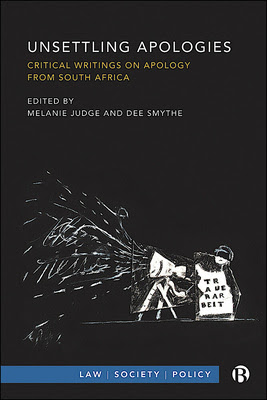
Colleagues of mine in African studies, Professors Melanie Judge and Dee Smythe published Unsettling Apologies: Critical Writings on Apology from South Africa.

Known for the truth and reconciliation processes that followed Apartheid, South Africa has been a font of experience and acquired wisdom about the role of transparency and truth in redressing mass atrocity. In this book, released in the fall from Bristol University Press, the South African editors compiled and co-authored some of the best and latest thinking and reflection on the function and debated efficacy of apology.

This is the précis.

There has recently been a global resurgence of demands for the acknowledgement of historical and contemporary wrongs, as well as for apologies and reparation for harms suffered. Drawing on the histories of injustice, dispossession and violence in South Africa, this book examines the cultural, political and legal role, and value of, an apology. It explores the multiple ways in which "sorry" is instituted, articulated and performed, and critically analyses its various forms and functions in both historical and contemporary moments. Bringing together an interdisciplinary team of contributors, the book's analysis offers insights that will be invaluable to global debates on the struggle for justice.

Even setting aside mass atrocities such as Apartheid, the theory of apology has resonance in tort law. "Apology laws" in the states seek to render apologies inadmissible as evidence in later litigation, especially in medical malpractice. Proponents posit that apology aids in healing and even averts litigation. That premise, and the efficacy of apology laws, is much studied and debated.

A masked Prof. Smythe previews the book at the annual meeting
of Law and Society in Lisbon, Portugal, in July 2022.

RJ Peltz-Steele CC BY-NC-SA 4.0
Judge and Smythe wrote the book's opening chapter, "The Power of Apology." The chapters thereafter offer a range of compelling titles. Smythe also co-authored, with educator Leila Khan, "Beyond Words: Apologies and Compensation in Sexual Offences." Smythe, a professor of public law on the faculty of law at the University of Cape Town, is a dear colleague who has been ceaselessly supportive of my research and teaching on African law and public policy.

Professor Sindiso Mnisi Weeks, a valued colleague at UMass Boston who generously has participated in my comparative law class in the past, contributed the chapter, "In Pursuit of Harmony: What is the Value of a Court-Ordered Apology?" University of Wisconsin constitutional comparatist Professor Heinz Klug authored, "Amnesty, Amnesia, and Remembrance: Self-Reflections on a 23-Year-Old Justification." Among all of the chapters, I especially appreciated the heart-rending history "On Not Apologising: Winnie Madikizela-Mandela and the TRC Hearing into the Mandela United Football Club" by Canadian Professor Shireen Hassim.

Abstracts of all chapters and the book's front matter are available at Bristol University Press Digital.

Friday, February 24, 2023

Nigerians pin high hopes on horse-race election

Voters bear PDP flags at a rally in Ilé-Ifè, Osun State, in December.
RJ Peltz-Steele CC BY-NC-SA 4.0

Update, March 1, 2023: Nigerian election authorities declared Bola Tinubu of the incumbent APC party as President-elect. Al Jazeera has data. Obi prevailed in Lagos, Abuja, and a band of southern states including Anambra, but turned in 6.1 million votes to Abubakar's 7 million and Tinubu's 8.8 million, according to official numbers. PDP and Labour vowed legal challenges after an election marred by technical difficulties and incidents of violent voter suppression. The U.S. State Department issued a press release.

Nigerians go to the polls in a landmark presidential election tomorrow, Saturday, February 25.

The election is landmark for many reasons. Nigeria is Africa's most populous nation. Polls show a horse race. The three-way contest with no incumbent offers an outsider option that's especially appealing to young voters. Beset by social and economic crises, Nigeria is perceived as standing at a crossroads from which ways lead either to catastrophic collapse of the rule of law or to sea-change development into continental economic powerhouse. And, unfortunately, Nigerian elections even in the best of times notoriously coincide with violent protest.

The three leading candidates are Atiku Abubakar, Bola Tinubu, and Peter Obi (linked to BBC profiles). I went to Nigeria in December to get the lay of the land.

I visited the Osun-Osogbo Sacred Grove, one of two UNESCO
World Heritage Sites in Nigeria. Regrettably, the other, the
Sukur Cultural Landscape, is not in a safely accessible region.
RJ Peltz-Steele CC BY-NC-SA 4.0
Atiku Abubakar is no stranger to the election process, having run unsuccessfully before against outgoing President Muhammadu Buhari. Abubakar represents the center-right People's Democratic Party (PDP), which was the affiliation of Buhari predecessor Goodluck Jonathan. The PDP tends to conservative economic and social policy, meaning, respectively, deregulation and religious values. The latter is especially significant in Nigeria, because outbreaks of violence and the government's loss of control of northern states are complications principally of religious sectarianism. Both Abubakar and Buhari are Muslim; Jonathan is Christian. Trying to balance the demands of both the Islamic north and the Christian south simultaneously, the PDP has favored deference to regional religious authorities through laissez-faire federalism in social as well as economic policy.

A car in Ilé-Ifè advertises PDP candidates. Ilé-Ifè is a spiritual home of the Yoruba people.
RJ Peltz-Steele CC BY-NC-SA 4.0

At the Central Mosque in Ilorin, Kwara State.
RJ Peltz-Steele CC BY-NC-SA 4.0
Bola Tinubu is the candidate of the All Progressives Congress (APC), the party of Buhari, who also was a military head of state in the 1980s. A millionaire, accountant, and former governor of Lagos, Tinubu is American educated and has past ties to U.S. mega-corporations such as Arthur Anderson, which collapsed after the Enron scandal, and ExxonMobil, specifically, Mobil Nigeria, which bought its way out of the environmental mess of the Niger Delta for $1.3 billion last year. A Muslim, Tinubu hails from southwestern Lagos and Oyo State. To broaden his appeal, he chose a Muslim running mate from the north, though Christian voters are disenchanted with the break from the tradition of a spiritually split ticket. The APC identifies with social-democratic economic policy. A favorite of the populous Yoruba ethnic group, Tinubu boasts of his business acumen, having brought record-breaking foreign investment to Lagos. But his ties to big business and the political establishment cause many, especially younger voters, to eye him warily. As well, kidnapping and violence in Nigeria have reached into even the southwestern states of Oyo and Osun, formerly regarded as safe, surfacing discontent with the incumbent APC's poor record on basic security.

The Nigerian capital of Abuja is developing an arts-tech district,
which I visited in December. The capital was moved in 1991 from
Lagos to Abuja, a planned city at a central geographic location,
selected for practical and symbolic reasons to unite Nigerians
of different ethnic and religious identities.

RJ Peltz-Steele CC BY-NC-SA 4.0

Peter Obi is the wild card. At 61, he's a kind of Nigerian Bernie Sanders for enthusiastic youth fed up with the status quo. He's a Catholic from east of the Niger River, which alienates Muslims in the north, while not necessarily delivering a go-to for Christians in the southwest: an uphill battle. An ethnic Igbo, though, he appeals to another populous ethnic group that feels marginalized by the two parties of the political establishment. In the Nigerian civil war of the 1960s, Igbo nationalists threw in with the secessionist Republic of Biafra, and the Igbo have struggled to reclaim political representation since.

Labour Party logo.
Via Wikipedia (fair use).
Formerly a PDP candidate, Obi in Saturday's election represents the Labour Party, which stands more overtly for social democracy than the APC does. Boasting a logo of a gear encircling people, Labour touts values of social justice and universal economic opportunity. That message strikes a powerful note in a country endowed with a wealth of natural resources, including oil, yet in which almost two-thirds of the population, some 134 million people, live in poverty. Gen Z voters in particular crave change, and they've reclaimed the term "coconut heads," formerly used to disparage perceived laziness, now to signal support for Obi.

Obi is a former governor of Anambra State, home of the busy river port of Onitsha on the east bank of the Niger. A friend of mine is an Anambra native, American educated in business, and an executive of a manufacturing firm in Onitsha. He's a Christian and Gen X, like me, but, despite his age, you can count him among the coconut heads. (I'm not naming him here for sake of his security. Though he has expressed his views publicly, and support for Obi is widespread in Anambra, we don't know what the future will bring for Nigeria, and there's no need to memorialize online one voter's politics.) He wrote a missive just two days ago that I think well captures the motivation of Obi supporters:

Nigerians have never been able to hold Gen. Buhari to task on any promise made before the 2015 general elections. He has not kept any. The reason is because those promises were made by his campaign spokespersons, aides and APC party officials. Same is repeating itself with Atiku and Tinubu. The two men have been prevaricating on what they would do if elected. In fact, Tinubu has not granted any interview to any Nigerian television/radio stations. He has also avoided every debate for the presidential candidates. He is running away from being held responsible for his words and promises.

In contrary, Peter Obi has attended every debates, townhall meetings and interviews that came up. He has also looked Nigerians straight in the eyes and told them to hold him responsible for his promises. In a television interview yesterday, Ahmed Datti, Mr. Obi's running mate, told Nigerians to fire them if they fail to improve their lives after four years.

The choice is yours. I and my household shall vote Peter Obi's Labour Party for presidency on Saturday, 25th February, 2023.

When I visited Nigeria in late autumn, I hoped to learn more about the social and political situation in the country than I could glean from reading from home. For better or worse, I didn't absorb much that was new. Nigeria's reality on the ground is precisely what it appears to be: a nation that exemplifies "the resource curse," awash with oil yet riddled with poverty; a people flush with potential yet stymied by venal institutions. Insofar as Nigeria's present predicament makes it a bellwether for west and central Africa, more might ride on Saturday's election than even one nation's presidency.

I've long witnessed my friend in Onitsha rail in frustration at Nigeria's inability to combat corruption and climb to its rightful place as a social and economic leader on the world stage. Having been welcomed by people of such a famously boisterous yet warmly embracing national culture, I'm brimming with empathy. Maybe this election at last will show a way forward and upward.

 
Celebrants rally for the PDP in Ilé-Ifè in December. Political parties sometimes pay supporters to turn out, so it can be difficult to gauge true voter fervor on the basis of public demonstration.
RJ Peltz-Steele CC BY-NC-SA 4.0

Wednesday, February 1, 2023

EU leverages trade for sustainable development

Attorney Cyprian Liske presents at the University of Bologna.
Used with permission.
"Sustainability" is the word of our times, and the European Union has more than a decade's experience building sustainability expectations into trade agreements.

At the University of Bologna in October, for a program of the Guild of European Research-Intensive Universities, doctoral candidate Cyprian Liske, my friend, colleague, and former student, presented his research on sustainable development provisions in EU trade agreements concluded from 2010 to 2020. Here is the abstract:

On 27th November 2019, Ursula von der Leyen, at that time President-elect of the European Commission, delivered a speech in the European Parliament, in which she set a concise programme for the next 5 years of her term of office. "Sustainability" was mentioned in this speech no less than 8 times. "We have to bring the world with us and this is already happening," Ms. President said. "And Phil Hogan [at that time Commissioner for trade] will ensure that our future trade agreements include a chapter on sustainable development."

Indeed, the EU has been including trade and sustainable development (TSD) chapters in new-generation trade agreements since the Free Trade Agreement with South Korea (2010). However, such TSD chapters, devoted to the realisation of the Sustainable Development Goals, including environmental protection, preventing resource depletion, or protecting workers' rights, differ substantially in agreements concluded with particular countries....

The goal of the project was to comparatively analyse TSD chapters in trade agreements concluded by the EU in 2010-2020, pointing out common elements and differences. The analysis will let us critically explore what the reasons for those differences may be (e.g., the course of negotiations, economic dependency, trade partners’ level of development) and whether the EU is consistent in its sustainability requirements set towards its trade partners. It will also allow us to depict the current tendencies in the way how such TSD chapters are shaped by the EU in comparison with the global trends. The comparative analysis of the EU TSD chapters was conducted by the researcher qualitatively and quantitatively with the use of software (MAXQDA 2022).

The research parses the interests advanced by EU agreements..
© Cyprian Liske; used with permission.
The Biden administration lately has redoubled the U.S. commitment to the developing world, announcing at a December summit, for key example, an investment of $55bn in Africa over the next three years.

Development aid is often viewed skeptically by American taxpayers. That's understandable when the homeland is plagued by homelessness and financial insecurity. Isolationism streaks run through both libertarian and conservative ideologies, evidenced lately by Republican skepticism even of aid to Ukraine. But development aid can be justified with reference simultaneously to socioeconomic benevolence and to the donor's national security, thus, appealing to priorities both liberal and conservative.

Literal signs of Chinese investment are ubiquitous throughout Africa, as here,
in the rural community
d'Oukout in the Casamance region of Senegal, 2020.
RJ Peltz-Steele CC BY-NC-SA 4.0
The United States has a lot of catching up to do. With hotly debated motive, China has invested heavily in the developing world, near and far from its borders. Chinese presence in Africa is ubiquitous, from massive infrastructure projects such as ports and bridges to telecommunication access in the remotest of villages. Russia, too, has lately gone all-in on Africa: a "charm offensive," researcher Joseph Siegle wrote last year, and "[t]he reasons aren't pretty."

Incorporating sustainable development into trade agreements allows western powers to facilitate development goals at less cost than direct investment, and even with potential gains through free trade. There's still a lower-common-denominator problem when competing against proffered Chinese and Russian agreements that attach browbeating strings only on the back end. But access to Western markets brings some incentive to the table.

A practicing lawyer and legal translator, Liske is pursuing his doctorate on the nexus between sustainable development and international trade law in the context of EU external policy. He graduated in law from Jagiellonian University and in business linguistics from the Tischner European University, both in Kraków, Poland, and both with distinction. He also is an alumnus of the American Law Program of the Columbus School of Law of the Catholic University of America, and of the English Law and Legal Methods International Summer Programme of the University of Cambridge.