Showing posts with label book review. Show all posts

Monday, December 15, 2025

'How Beautiful We Were' when 'They Poisoned the World': What I've been reading, 2025 edition

It's been since the pandemic that I wrote an installment of "What I've Been Reading."

With some time to spare in transit recently, I've been catching up on my reading. And with the gift-giving season upon us, I thought it would be fun to share. Maybe I can spark an idea for that hard-to-shop-for person on your list.

Though be warned, books implicating torts are not necessarily best if your aim is to lighten the mood at the family holiday table. Fortunately, there's a range here: nonfiction and fiction, spiritual journey, family epic, fable, and fantasy. Take your pick, and enjoy!

What I've Been Reading, 2025 Edition

Mariah Blake, They Poisoned the World: Life and Death in the Age of Forever Chemicals (2025). Nonfiction/investigative journalism. If you've somehow been feeling good about the world, this book will take the wind out of your sails. The earth is so poisoned with forever chemicals such as PFAS (see John Oliver's 2021 show) that they can be found even in the blood of newborns in remote parts of the world. Innumerable burgeoning health complications, from cancers to strokes, might be linked to our inadvertent consumption of these unnatural poisons. And we're not making a priority of their elimination from the environment, if even we can figure out how to do that. Aggravatingly, the companies that produce this stuff seem to be following the playbook that Big Tobacco wrote in the 20th century, from denial to self-serving "science," to negotiated immunity.

Investigative journalist Mariah Blake, who has written for The Atlantic, among other prominent publications, artfully weaves together the story of transnational industrial impunity with the real lives of people and communities devastated by illness. The book is important, terrifying, and saddening.

Imbolo Mbue, How Beautiful We Were (2021). Fiction/contemporary novel. Imbolo Mbue is a Cameroonian-American writer based in New York. Her second novel, this epic revolves around a family from a fictional African village that is overrun by a large American oil company. Extraction poisons the environment, sickening and killing children and adults. The story sees the family migrate to America and play a part in a revolt back home. One strand of the story traces (realistically unsuccessful) litigation against the oil company under the alien tort statute in the United States. Mbue's writing is beautiful, and that kept me turning pages—as it did in her first novel, Behold the Dreamers (2016).

As much as I wanted to adore this book, I found the story more superficial than insight-bearing. That might be on me; I came to the book already familiar with both the impact of western corporatocracy on Africa and the Big Oil playbook on environmentalism, besides the plot line of alien tort litigation. The book earned ample acclaim, perhaps justifiably for bringing these themes to popular attention. What I did like, and liked most, in the book was the perspective of family elders later in the story. They watched, helpless and with mixed emotions, as younger generations in the States were absorbed into the very culture that had devastated an ancestral homeland the youth did not remember.

Charlie Jane Anders, The City in the Middle of the Night (2019). Fiction/science fiction. I had wanted to read this science fiction book since I heard an NPR review in 2019. The novel tells the story of two different cities, one in the clutch of oppressive governance, and the other dangerously close to anarchy; and of two very different protagonists, coming from different sides of the tracks, as it were. They live on a planet where humans can survive only in the temperate zone between, symbolically, a light side and a dark side. The protagonists have disparate appetites for the revolutionary movement they both are drawn into. Meanwhile, the human population on the planet regards the monstrous indigenous creatures as mere animals. Yet one of the protagonists, thought to be exiled to die, discovers the creatures to be sentient telepaths.

The themes are familiar: the seemingly counterproductive yet lately resonant human affection for authoritarianism; the privileged protagonist who falls for the proletarian revolution; the forbidden love of opposites; and the seeming monster that secrets a superior morality. In the end, I'd say I was disappointed. The book was long, which meant going a long way for trite themes that have been explored better already in science fiction classics.

Eddie Izzard, Believe Me: A Memoir of Love, Death and Jazz Chickens (2017). Nonfiction/memoir. If you've never heard of Eddie Izzard, this book might be a heavy lift. But if like me, you're a fan, and you're keen to understand what makes Eddie Izzard's remarkable mind work the way it does, this book is worthwhile. I listened to the audiobook and recommend that. It's best to hear Izzard tell her own story. (Gender-fluid Izzard prefers feminine pronouns, but says not to get hung up on it.) And because the book is often funny, there's nothing like a comedian's own timing. I like to listen to David Sedaris books for the same reason. But this audiobook is especially good because Izzard ad-libs a bit and artfully incorporates her many tangent footnotes into the flow of the narrative. The audiobook therefore comes off with the same structure as Izzard's stand-up, seemingly meandering yet slyly serpentine. My erudite friend Ethan Dazelle and I saw Izzard live at the Vets, for her "Force Majeure" show, in Providence, Rhode Island, in 2015. The show was as memorable as it was mind-boggling; I wished I had had footnotes then, for all that went over my head.

This is not Izzard's first book. But this book stands apart from her humor books as a deeply personal memoir. The audiobook well captures not only Izzard's sharp wit, but the emotional highs and lows of her life story. The first-person account of how her career came to be is fascinating, especially alongside her coming around to express publicly her sexual identity. Izzard included her television experience with The Riches, which I was pleased to hear. I always have thought that that show, from the 20-aughts, was profoundly underrated; it's often described today as "ahead of its time."

Stories of Izzard's parents and her relationships with them are moving. Curiously from a tort perspective, Izzard's father worked in accounting for BP. That's why Izzard was born in Yemen, a fact I knew, though I did not know why. The family's moves to Northern Ireland, Wales, and then England in Izzard's childhood perhaps give a clue to Izzard's breathtaking consciousness of language, though do not fully explain her easy multilingualism. In the end, nurture does not explain the full measure of Eddie Izzard's peculiar kind of savant; nature must have been a quiet collaborator.

Dave Eggers, The Eyes and the Impossible (2023). Fiction/fantasy. This book by Dave Eggers, whose breakthrough memoir, A Heartbreaking Work of Staggering Genius (2000) was a Pulitzer finalist, won the 2024 Newbery Medal. So that's right: this is a children's book. Technically. My favorite book I read (or listened to) this year, The Eyes is the first-person narrative of a dog, Johannes, who lives in a park. To say more would deprive you of the joy of discovering Johannes's story, and of joining him on his journey of discovery. I will say only that Johannes is never wounded and does not die at the end; my heart just wasn't up for another My Dog Skip or Racing in the Rain, much as I loved those books. 

Heartbreaking Work already demonstrated that Eggers is one of those rare souls endowed with old wisdom, inexplicably defying the bounds of lived perspective. In The Eyes, he puts that wisdom to work to generate a wholly unique fable: the sort of story that can be interpreted and appreciated differently in different phases of a reader's life. I found the book simultaneously amusing and deeply moving; I expect the young cousin to whom I gifted the book will find the same, though for entirely different reasons. I'm always reluctant to describe Heartbreaking Work to someone; rather, I say, you just must read it for yourself. Well, in a fresh and inventive new way, Eggers has done it again, this time for all ages. 

The print version of The Eyes features beautiful illustrations by Shawn Harris. However, I listened to the audiobook, in which the gifted Ethan Hawke, yes, that Ethan Hawke, brought Johannes to brilliant life. A sequel, The Eyes, the Fire and the Avalanche Kingdom, is available for pre-order on January release.

Neil Gaiman, Norse Mythology (2017). Fiction/ancient mythology. Gaiman opens this book by explaining his great affection for Norse mythology and his desire to retell it himself. And that's what the book is, a collection of Norse myths. They're enjoyable stories, and all the better in the characteristically lyrical style that has earned Gaiman a loyal fan base. 

It turns out that most of what I thought I knew about Norse mythology comes from the Marvel universe, and some from Netflix's excellent three-season Ragnarok. Those fictions are good on their own merits, but they perpetuate some popular misconceptions. As Gaiman explains in the introduction to Norse Mythology, one key misconception in the popular imagination is the idealization of Thor. In the real myths, Thor was kind of a meathead. Gaiman's stories capture that. Marvel and Ragnarok get right that Loki is not so much evil as "complicated."  I especially like Gaiman's stories because they fill out the character of Odin. The Allfather is the character who should be idealized, the truly deific hero of Norse mythology, who gets short shrift in contemporary adaptations as past his prime.

Overall, there's much to enjoy here. The Norse myths after all articulate a whole and fully functional world vision. The world of the Norse gods stands on its own and does not require the multicultural contextualization that contemporary fictionalizations are eager to impose.

Nabeel Qureshi, Seeking Allah, Finding Jesus: A Devout Muslim Encounters Christianity (2014). Nonfiction/religion. Obviously, this book won't be everyone's cup (nor three cups) of tea. It's Nabeel Qureshi's intimate firsthand account of his conversion from Islam to Christianity. The book was recommended to me by a Christ-committed cousin who has worked as a missionary in places in the world where doing so is dangerous. A Christian myself, I'm predisposed to appreciate the conversion narrative, and I did. But I'll say that, notwithstanding my predisposition, I enjoyed and appreciated Qureshi's story from a simply human interest perspective. He describes a journey of spiritual yearning and growth; his changing relationships with family and friends in the course of that journey; and along the way, his cultural experience as a Pakistani-American, son of a U.S. Navy officer, especially in the aftermath of 9/11.

Qureshi became a medical doctor, but devoted his life to Christian apologetics. He completed master's degrees at Biola, Duke, and Oxford, and he became a favored speaker on the university circuit, promoting peaceful interfaith dialog. In 2010, he and associates were arrested in Dearborn, Michigan; police alleged they disturbed the peace while answering questions from Muslim teens. A civil rights lawsuit by the arrestees drew exoneration and an apology from the city. Qureshi was working on his doctorate at Oxford when he died of stomach cancer in 2017, at age 34, only a year after diagnosis and two years after the birth of his daughter (Christianity Today).

After Seeking Allah, Qureshi published two books in 2016: Answering Jihad: A Better Way Forward and No God but One: Allah or Jesus?: A Former Muslim Investigates the Evidence for Islam and Christianity. There also is a video study series associated with Seeking Allah, Finding Jesus.

Not directly related to Qureshi's book, but another book in the genre of religious nonfiction that I read this year with a group of Christian academics, which book I do recommend and might be of interest relative to current events, is Peter Beinart, Being Jewish After the Destruction of Gaza: A Reckoning (2025). Now a journalism professor at CUNY, Beinart, who is Jewish, has been a New Republic editor and Atlantic contributor. He writes compellingly on the inevitable incompatibility of Netanyahu war policy with the teachings of Hebrew scripture.

Happy reading, and happy new year. Maybe humanity will do better in 2026. Nothing is impossible.

Friday, December 5, 2025

Author of 'Surviving Your Friend's Cancer,' law alumna Kayleigh Ellison made world better, brighter

Kayleigh's relentless smile,
from the UMass Dartmouth
soccer roster
I'm sad to hear and to share news of the death of Kayleigh Dawn Marie Ellison on November 27.

Originally from Troy, Mo., and a graduate in diplomacy and international relations from Seton Hall University, Kayleigh was an alumna of my first-year torts class at UMass Law.

Kayleigh was an extraordinary and inspiring person. Because full-time law school could not keep her busy enough, she played soccer for the campus Corsairs at UMass Dartmouth.

Her remarkable obituary offers ample illustration of life well lived. She met every challenge with unflinching determination, and every setback with joyful resilience, from cancer to law school to defenders on the pitch, and she exuded infectious vibrancy all the while.

Surviving Your Friend's Cancer
by Kayleigh Ellison,
available at Lulu 

Among the countless ways in which Kayleigh made the world a better and brighter place, she authored a book, Surviving Your Friend's Cancer (2015). She told me that as hard as it was to fight cancer, it was just as hard to help friends overcome their anxiety over what to say and how to be present for her. She figured she could help other sufferers and their friends and families by giving some simple guidance. Her characteristic gentle humor outshined painful context.

I appreciated the book when I read it in the abstract. I have treasured it since, when I have needed its advice. I highly recommend it.

And I highly recommend taking inspiration, a recommitment to live every day to its fullest, from Kayleigh's life story. I know she would much prefer that to anyone's overindulgence of grief.

The UMass Dartmouth Torch wrote about Kayleigh and her book in 2016. The same year, Kayleigh appeared in a short UMass Law promo video. A related public relations piece features two fantastic photos from the soccer pitch by award-winning (New Bedford, Mass.) Standard-Times photographer Mike Valeri. Notice Kayleigh's smile in the latter. (If anyone can reach The Standard-Times or Valeri, please ask whether they might contribute the photos to Kayleigh's obituary page. I tried, but The Standard-Times staff directory is 403.)

Surviving Your Friend's Cancer remains available from Lulu at the time of this writing.

Monday, September 8, 2025

Stornaiolo publishes book of memoir, travel tracts

Ugo S. Stornaiolo Silva has published a new book, Wandering Meanderings (Into the Idea of Love): The Libertarian Catholic Essays (2023-2025) (2025) (Amazon).

Polymath Stornaiolo writes on political theory, history, and law, and authors poetry, besides. His poetry is collected in Princely Rhymes (2023) (Amazon). This latest book is deeply personal, intermingling interests with memoir and travel log. Here is the publisher's description.

Wandering Meanderings is a memoir-in-essays by a man between homelands, Catholic by anchor, boundless by culture, who keeps a passport in one pocket and notebook in the other.

From Kraków trams, Viennese Mass, and Westminster corridors to nameless winter streets, these essays track how love, friendship, and meaning are made at human scale: slowly, locally, face to face.

For him, beauty wrestles with the sublime, proximity argues with digital distance, and mentors, muses, and peers form the living triad of a life, as Erasmus and Thomas More hover like friendly ghosts, Lords Acton and Byron quarrel on his shoulders, and Leo Tolstoy and Mark Fisher speak across the dark. Travel becomes a way of thinking, and thinking a way of keeping faith with places and people.

This is a conservative book of affections, a romantic book of cities, and a refusal of modern affectations. Attention is not love, algorithms aren’t providence, and abundance without presence is a desert. The remedy is old and demanding: fidelity to the near until meaning appears.

Part travel log, part philosophical meditation and part confession, Wandering Meanderings invites anyone who has felt out of place yet alive to truth, beauty, and goodness to step back onto the pilgrim’s road into the idea of love itself.

Stornaiolo works as a legal researcher for the Centre for Law and Religious Freedom at Jagiellonian University in Kraków, Poland. He serves as an associate editor for The Miskatonian and writes as well for The Libertarian Catholic and for the Mises Institute.

I have featured Stornaiolo's work here on The Savory Tort before, including two books that preceded Princely RhymesJueces Como Soberanos: Una Exploración Jurídico-Política del Poder Supremo de la Corte Constitucional Ecuatoriana (2022) (Amazon), and Achaean Disputes: Eight Centuries of Succession Conflicts for the Title of Prince of Achaea (2024) (Amazon).

Stornaiolo is an Ecuadorean and European attorney, now living in Kraków, and a friend, colleague, and former LL.M. student of mine. He kindly has visited my U.S. classes via Zoom to speak on topics such as comparative constitutional law and the Ecuadorean case law on the rights of nature.

Tuesday, March 18, 2025

Book details knotty business of higher ed counsel

By attorney Louis H. Guard and academic Joyce P. Jacobsen, All the Campus Lawyers (2024) is a compelling recent read for anyone interested in the law of higher education—whether as a counselor, as a client, or as a victim of higher ed machinations. I've been all three.

Guard and Jacobsen both are affiliated with Hobart and William Smith Colleges—a beautiful double campus I visited just last summer, perched atop Seneca Lake in Geneva, New York, in the Finger Lakes region. Guard is a general counsel there, and Jacobsen a past president and economics professor.

All the Campus Lawyers thoroughly covers the many facets of higher ed practice nowadays, from civil rights and labor, to intellectual property, contracting, and cybersecurity. It is a lot to see it all in one place. At an overarching level of abstraction, the book—which is subtitled, "Litigation, Regulation, and the New Era of Higher Education"—ponders how and why law has become pervasive, and sometimes paralyzing, of higher ed. 

To my reading, Guard and Jacobsen are careful to avoid a normative agenda, and rather strive to be descriptive, instructive, and sometimes even inspiring. But I came away with an uneasy feeling in the belly that law, at least in practice, has a stranglehold on the free-wheeling nature of academic inquiry that classical-liberal society associates with the "quintessential marketplace of ideas." 

If higher ed is just a business—and maybe it always was—law, from the perspective of university counsel, seems to be part of the problem: supporting the business framing with defensive practice and risk aversion, and prizing the institution over the people who constitute it and whom it serves. No doubt my perception is colored by experience.

I stop by the Geneva, N.Y., Welcome Center in July 2024.
RJ Peltz-Steele CC BY-NC-SA 4.0
Another impression I had of the book was that it is siloed, tending to view the mission creep of law in the higher ed sector to the exclusion of the same phenomenon across American life. Indeed, what business, what person does not need a lawyer to navigate the world today, even if ordinary people have to manage without, usually to their detriment. I'm not sure the problem of law in higher ed can be examined exclusively of "the legalization of American society" (meaning ubiquity of law, not blessing of lawfulness).

Furthermore, there is, to my mind and at one level, a rather simple explanation for law's infiltration of higher ed. With a hat tip to Lincoln Steffens and Clark Mollenhoff: Follow the money. The relevant question might not be why law has become pervasive in higher ed, but why higher ed has become big business rather than collective good or philanthropy. Guard and Jacobsen are too ready to take that twist of mission for granted.

Despite my nitpicks, Campus Lawyers is a worthwhile read for a fuller understanding of the relationship between law and higher ed, and especially for insight into the modus operandi of university counsel.

Here is the publisher's description:

Not so long ago, colleges and universities had little interaction with the law. In the 1970s, only a few well-heeled universities even employed in-house legal counsel. But now we live in the age of tenure-denial lawsuits, free speech battles, and campus sexual assault investigations. Even athletics rules violations have become a serious legal matter. The pressures of regulation, litigation, and legislation, Louis Guard and Joyce Jacobsen write, have fostered a new era in higher education, and institutions must know how to respond.

For many higher education observers and participants, including most administrators and faculty, the maze of legal mandates and potential risks can seem bewildering. Guard, a general counsel with years of higher education law experience, and Jacobsen, a former college president, map this unfamiliar terrain. All the Campus Lawyers provides a vital, up-to-date assessment of the impact of legal concerns on higher education and helps readers make sense of the most pressing trends and issues, including civil rights; free speech and expression; student life and wellness; admissions, advancement, and community relations; governance and oversight; the higher education business model; and on-campus crises, from cyberattacks to pandemics.

As well as informing about the latest legal and regulatory developments affecting higher education, Guard and Jacobsen offer practical guidance to those in positions of campus authority. There has never been a more crucial time for college and university boards, presidents, inside and outside counsel, and other higher education leaders to know the law and prepare for legal challenges.

Of course, it remains to be seen what remains of higher ed after the Trump Administration. Guard and Jacobsen might have accomplished the equivalent of a book about the flu on the eve of the pandemic, in which case, we'll need a revised edition sooner rather than later.

Monday, January 13, 2025

Mother of slain scholar publishes his account of academic workplace mobbing at UMass (Amherst)

At the inaugural Niagara Conference on Workplace Mobbing at Niagara University last summer, easily the most moving and haunting presentation was that of Kimberly Lewis, whose son lost his life after being victimized by workplace mobbing.

A scholar, Joel Inbody authored a book manuscript about his experience as a victim of academic workplace mobbing at the University of Massachusetts (Amherst). After his death, his mother, Lewis, edited and completed the book in partnership with the pugnacious publisher Herb Richardson, founding editor of Mellen Press

Inbody wrote: "I wrote this book to critically explore an academic mobbing that sociologists subjected me to as a graduate student in 2018-2019. After thoroughly reviewing available literature on mobbing to highlight their history, severity, and progression, I analyze content from numerous records (emails, police reports, notes, letters, blog posts, pictures) and rely on autoethnography to describe the mobbing that I lived through."

A Student's Account of the Mobbing That Led to His Murder (How U. Mass Faculty Bullied Him to Death (2024) became available for sale at Mellen Press late last year.

Lewis's presentation, along with most of the presentations at the 2024 Niagara Conference on Workplace Mobbing, is available on YouTube.  The 2025 Niagara Conference on Workplace Mobbing (via The Savory Tort) is open for registration.

Q&A: 

Tuesday, December 3, 2024

New book traces royal Achaean lineage in legal history

Ugo Stornaiolo Silva has published a new book, Achaean Disputes: Eight Centuries of Succession Conflicts for the Title of Prince of Achaea.

Here is the précis from the book jacket:

This study delves into the intricate succession landscape surrounding the medieval title of Prince of Achaea and the older associated dignity of King and Despot of Asia Minor, tracing their historical roots, and assessing its contemporary status if ever reclaimed by the Damalas family, senior direct-line heirs to the Genoese Zaccaria dynasty, last sovereign house to have used it as rulers of Achaea.

The multidisciplinary research method used incorporates the review of recent genealogical studies, analysis of historical sources and medieval accounts, like the Chronicle of Morea and the Chronicle of the Tocco, to establish the title's nature, antiquity and succession history, and the application of historical Roman, Byzantine and Frankish Greek feudal law (the Assizes of Romania, in particular) to assess the legitimacy of competing claims for the title over time, particularly within the Zaccaria family and later by the Tocco lineage, and ultimately of modern comparative nobiliary law and elements of private law to discuss its theoretical rehabilitation in favor of the Damalas descendants of the Zaccaria Princes of Achaea.

Stornaiolo, an Ecuadorean lawyer and my friend, colleague, and once student, is a true "Renaissance man." He has researched and written on economics for the Mises Institute and on society for The Libertarian Catholic. He holds two master's degrees in law, from Université d'Orléans and Catholic University of America. Stornaiolo visited my comparative law class via Zoom in 2023 to speak on the development of the Ecuadorean Constitutional Court, the subject of a previous book. He also writes poetry. This latest book draws on his expertise in law and classical studies. He lives presently in Kraków, Poland, where we reconnected in person last week.

Friday, November 1, 2024

New book spotlights freedom of press in film

My friend and colleague Helen J. Knowles-Gardner, formerly a political science professor and now research director at the Institute for Free Speech, along with co-author Professor Emeritus Bruce E. Altschuler and Professor Brandon T. Metroka, has published a gratifyingly compelling new book, Filming the First: Cinematic Portrayals of Freedom of the Press (Lexington Books 2025).

The engaging cover art was created by illustrator Doug Does Drawings (X, Etsy, Instagram, YouTube).

Here is the publisher's description of the book:

The First Amendment to the U.S. Constitution prohibits Congress from abridging freedom of the press. But, as the printed press has been transformed into mass media with Americans now more likely to get their political information from television or social media than from print, confidence in this important, mediating institution has fallen dramatically. Movies, in their role as cultural artifacts, have long reflected and influenced those public attitudes, inventing such iconic phrases as “follow the money” from All the President’s Men and “I’m mad as hell and I’m not going to take this anymore” from Network. Filming the First: Cinematic Portrayals of Freedom of the Press analyzes eighteen films that span from Citizen Kane to Spotlight showing changes in how the press have been portrayed over time, which voices receive the most attention and why, the relationship between the press’s “Fourth Estate” role and the imperatives of capitalism, and how, despite the First Amendment’s seemingly absolute language, the government has sometimes been able to limit what the public can read or view.

I was privileged to review an advance copy of the book and am quoted aptly on the back cover: 

Filming the First is a deeply thought-provoking exploration of America's cinematic engagement with "the press." Through the revealing social implications of the big screen, Filming the First interrogates press freedom from yellow-journalism sensationalism to Watergate and Vietnam heroics, to the existential threat of misinformation. Organizing eighteen films into ten thematic chapters, Filming the First embraces both classics and the avant-garde and treats readers to perspectives on mass media from the reverent paean to the ruthless critique. Knowles-Gardner, Altschuler, and Metroka locate their diverse film selections each in its social, cultural, and legal context. Upon each exposition, the writers relate key takeaways to the perils and uncertainties that surround the business of media in our polarized present day. Filming the First is a thrill ride for film buffs, free speech aficionados, and anyone willing to engage with the struggle to define media's place in modern democracy.

If I ever again have the freedom to teach an indulgent topical seminar, this book is at the top of my list.

Here is the table of contents.

Chapter 1. Censorship in a Time of War: Good Morning, Vietnam
Helen J. Knowles-Gardner

Chapter 2. A Media Mogul Battles Against His Fictional Doppelganger: Citizen Kane and RKO 281
Bruce E. Altschuler

Chapter 3. Heroic Newspaper Reporters, Editors, and Publishers Battle the President – All the President’s Men and The Post
Bruce E. Altschuler

Chapter 4. Technology Transforms the Press into the Media: Network and The Social Network
Bruce E. Altschuler

Chapter 5. “How Can We Possibly Approve and Check the Story…?”: Good Night, and Good Luck and The China Syndrome
Helen J. Knowles-Gardner

Chapter 6. Testing the Limits of Freedom: Denial and Deliberate Intent
Helen J. Knowles-Gardner

Chapter 7. Responsibility Matters: Shattered Glass
Helen J. Knowles-Gardner

Chapter 8. Creating Protagonists, Competing Interests, and Uncertain Legal Standards: The People vs. Larry Flynt and Citizenfour
Brandon T. Metroka

Chapter 9. A Tale of One Press Clause and Two Journalisms: Spotlight and Out in the Night
Brandon T. Metroka

Chapter 10. Mainstream Press Negligence and its Effects: The Normal Heart and Tongues Untied
Brandon T. Metroka


Monday, March 11, 2024

Book supports legal privilege for undercover reporting

Truth and Transparency, a recent book by Professors Alan K. Chen and Justin Marceau, is a comprehensive and gratifying tour of the history and law of undercover reporting.

Chen and Marceau teach at the Sturm College of Law at Denver University and have especial expertise in constitutional law, and respectively in public interest law and animal law. In their co-authorship, they examine the social phenomenon of undercover reporting that lies at the intersection of journalism, tort law, and the First Amendment—and often animal law, too.

I know Chen best for his work in opposing ag gag laws: statutes designed to stop and punish journalists, activists, and whistleblowers from investigating and revealing wrongful conduct and animal cruelty in the agricultural industry, especially by way of undercover video recording. Chen has worked against ag gag in Idaho, Iowa, Kansas, and Utah. I've been privileged to sign on to some of the amicus briefs he has coordinated.

Chen and Marceau leave no stone unturned. I was intrigued especially to read about the history of undercover reporting in the United States, the evolution of undercover reporting in its treatment in journalism ethics, and the thorough explication of undercover reporting in tort and First Amendment law.

Upton Sinclair's 1905 The Jungle, a novel based on real-life undercover reporting in the meatpacking industry, was my mind's go-to on the early history of the practice. Apropos of the present Women's History Month, however, it was female reporters such as Nellie Bly who carved out a niche for undercover reporting in the popular imagination in the late 19th century and deserve the most credit for pioneering the genre.

Bly, born Elizabeth Jane Cochran, famously had herself committed to a deplorable New York mental institution in 1887 for 10 days before a New York World lawyer secured her release, per prearrangement. Chen and Marceau recount the stories of Bly and other so-called "girl stunt reporters." They trace the history even further, as well, to antebellum abolitionists determined to expose the horrors of slavery.

Chen and Marceau explore a range of treatments of undercover reporting in journalism ethics, including the qualified permissiveness of the 1996 Code of Ethics of the Society of Professional Journalists, preserved in the more recent 2014 iteration. They observe as well the almost complete prohibition on the practice at National Public Radio, where journalists may engage in deception only when necessary to protect themselves in a conflict zone, and secret recordings may be used in only extraordinary circumstances.

A case that naturally arises throughout the book is the ABC News investigation of hygienic practices at Food Lion in the 1990s (at Reporters Committee). This case was contemporary with my university study of journalism, so was front and center in my class on journalism ethics. Whether or when journalists might engage in deception to get the story is a favorite point of discussion in journalism ethics class. The problem stratifies the need for public trust in journalism across the micro layers of people who are the subjects of stories and the macro layers of readers and the public interest. 

A court in Food Lion ultimately held that ABC journalists could be sued for trespass or breach of loyalty, but awarded only nominal damages. The factual problem for the plaintiffs that precluded a more substantial damages award was that notwithstanding the concealment of their motives, the journalists had been given jobs at Food Lion, and they did their jobs. So from a damages perspective, Food Lion got what it paid for. The appellate court, unlike the trial jury, was unwilling to consider the reputational harm flowing from truthful disclosures, if deceptively obtained, as any kind of compensable loss.

The outcome in Food Lion was consistent with the broad propositions of First Amendment law that there is no right to gather the news, which is why the Freedom of Information Act is a statutory rule, not a constitutional one; and that journalists are not exempt from generally applicable expectations of law, such as honoring contracts, obeying police orders—and not trespassing. As Chen and Marceau observe, the outcome exerted a chill in investigative reporting.

However, the Food Lion rule is hardly absolute, Chen and Marceau also aptly observe. The rule of no-right-to-gather-news has never been wholly true. The courts have given media latitude to test the limits, for example disallowing wiretap liability for receiving probably illegally intercepted communications. And technological advances have complicated the picture. A majority of U.S. circuit courts now, in a post-George Floyd world, have held that the First Amendment protects video-recording police in public places. The proposition seems right, but it doesn't square with the news-gathering rule.

The outcome in Food Lion further hints at a deeper problem in tort law that Chen and Marceau explore: the problem of damages in cases of only notional harm. In contemporary doctrine, a trespass with no infliction of physical harm or loss might entitle a plaintiff to an equitable remedy of injunction, but no more than nominal damages in tort law, thus Food Lion. Though with no damages in the offing, there is no deterrence to deceptive trespass, a logic that likely explains the eventual waning of Food Lion's chilling effect. The problem bleeds into the contemporary debate over the nature of damages in personal privacy violations. 

Journalism exceptionalism resonates as well in the problem of trespass and consent. Food Lion suggests that consent to enter property is vitiated by deception as to one's motive. Chen and Marceau explore opposing academic and judicial views on the question.

In a remarkable work of empirical research unto itself, Chen and Marceau's chapter 6 presents compelling data to show overwhelming public support for undercover reporting to expose wrongdoing. Public support seems to transcend political ideology and even whether the perpetrator of deception is a journalist or activist.

Chen and Marceau argue summatively and persuasively for a qualified legal privilege to protect journalistic deception in undercover reporting. Historical, ethical, and legal authorities all point in the same direction. Even the Fourth Circuit in Food Lion hedged its bets, observing that generally applicable employment law as applied in the case had only an "incidental effect" on news-gathering; in other words, news-gathering was outweighed as a consideration, not shut out.

Technological advances and citizen journalism will continue to generate conflict among conventional norms of property and fair dealing, evolving norms of privacy, and public interest in accountability in private and public sectors. Truth and Transparency is an essential manual to navigate in this brave new world.

Sunday, May 21, 2023

Scholars examine efficacy of apology in book born of truth and reconciliation in South Africa

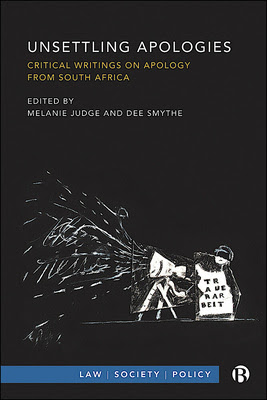
Colleagues of mine in African studies, Professors Melanie Judge and Dee Smythe published Unsettling Apologies: Critical Writings on Apology from South Africa.

Known for the truth and reconciliation processes that followed Apartheid, South Africa has been a font of experience and acquired wisdom about the role of transparency and truth in redressing mass atrocity. In this book, released in the fall from Bristol University Press, the South African editors compiled and co-authored some of the best and latest thinking and reflection on the function and debated efficacy of apology.

This is the précis.

There has recently been a global resurgence of demands for the acknowledgement of historical and contemporary wrongs, as well as for apologies and reparation for harms suffered. Drawing on the histories of injustice, dispossession and violence in South Africa, this book examines the cultural, political and legal role, and value of, an apology. It explores the multiple ways in which "sorry" is instituted, articulated and performed, and critically analyses its various forms and functions in both historical and contemporary moments. Bringing together an interdisciplinary team of contributors, the book's analysis offers insights that will be invaluable to global debates on the struggle for justice.

Even setting aside mass atrocities such as Apartheid, the theory of apology has resonance in tort law. "Apology laws" in the states seek to render apologies inadmissible as evidence in later litigation, especially in medical malpractice. Proponents posit that apology aids in healing and even averts litigation. That premise, and the efficacy of apology laws, is much studied and debated.

A masked Prof. Smythe previews the book at the annual meeting
of Law and Society in Lisbon, Portugal, in July 2022.

RJ Peltz-Steele CC BY-NC-SA 4.0
Judge and Smythe wrote the book's opening chapter, "The Power of Apology." The chapters thereafter offer a range of compelling titles. Smythe also co-authored, with educator Leila Khan, "Beyond Words: Apologies and Compensation in Sexual Offences." Smythe, a professor of public law on the faculty of law at the University of Cape Town, is a dear colleague who has been ceaselessly supportive of my research and teaching on African law and public policy.

Professor Sindiso Mnisi Weeks, a valued colleague at UMass Boston who generously has participated in my comparative law class in the past, contributed the chapter, "In Pursuit of Harmony: What is the Value of a Court-Ordered Apology?" University of Wisconsin constitutional comparatist Professor Heinz Klug authored, "Amnesty, Amnesia, and Remembrance: Self-Reflections on a 23-Year-Old Justification." Among all of the chapters, I especially appreciated the heart-rending history "On Not Apologising: Winnie Madikizela-Mandela and the TRC Hearing into the Mandela United Football Club" by Canadian Professor Shireen Hassim.

Abstracts of all chapters and the book's front matter are available at Bristol University Press Digital.

Thursday, July 1, 2021

Genetic manipulation will transform humankind; Enríquez book aims to keep law, science in pace

Paul Enríquez, J.D., LL.M., Ph.D. (LinkedIn, SSRN) has published a must-have book for readers interested in the cutting-edge juncture of law and science.  A superb writer, Dr. Enríquez has geared the book for general audiences, while also offering plenty of thought-provoking flesh for lawyers and scientists alike to sink their teeth into.  And that's before science accidentally turns us into zombies.

Here is the précis of Rewriting Nature: The Future of Genome Editing and How to Bridge the Gap Between Law and Science from Cambridge University Press (2021).

History will mark the twenty-first century as the dawn of the age of precise genetic manipulation. Breakthroughs in genome editing are poised to enable humankind to fundamentally transform life on Earth. Those familiar with genome editing understand its potential to revolutionize civilization in ways that surpass the impact of the discovery of electricity and the development of gunpowder, the atomic bomb, or the Internet. Significant questions regarding how society should promote or hinder genome editing loom large in the horizon. And it is up to humans to decide the fate of this powerful technology. Rewriting Nature is a compelling, thought-provoking interdisciplinary exploration of the law, science, and policy of genome editing. The book guides readers through complex legal, scientific, ethical, political, economic, and social issues concerning this emerging technology, and challenges the conventional false dichotomy often associated with science and law, which contributes to a growing divide between both fields.

Besides being a family friend, Dr. Enríquez was, many moons ago, a student in one of my law classes: a rather impertinent fact I mention only to boast.  In truth, the student already had surpassed the mentor.  Nevertheless, he generously asked my feedback on some points of constitutional law for this book.  So I weaseled my way into the acknowledgments, and you can blame me if anything is wrong in the relevant chapter.

Here is the impressive About the Author:

Paul Enríquez, J.D., LL.M., Ph.D., is an intellectual property attorney and scientist who researches and writes at the intersection of law, science, and policy. He holds doctoral degrees in law and structural and molecular biochemistry. His research on law, science, and technology, genome editing, biochemistry, and the regulation of biotechnology, has been published in numerous scientific, legal, and popular-media publications, and has been presented at national and international conferences. He currently serves as a judicial clerk at the U.S. Court of Appeals for the Federal Circuit.

Buy yours now in hardback, paperback, or Kindle from Amazon.

Tuesday, December 22, 2020

First Amendment jedi 'Luke Skyywalker' turns 60, recounts storied battles for equality, liberty

My daughter co-directed this promotional video, published yesterday, for the multi-talented Jerrika Karlae.

I like hip-hop and rap, but not as much as I used to.  My taste in music, I admit, has been softened in middle age by nostalgia and an inexplicable draw to indie pop, AJR being my current fave (see "Bang!" on Today in August, on Ellen in October, and at the Macy's Thanksgiving Day Parade in November).  But I like to think that I still can appreciate a broad range of music, and for various reasons.  I like Karlae because she's a woman innovating in a genre that has been dominated by male artists (she's not just Young Thug's fiancée), and she represents the multiracial Atlanta arts scene on the contemporary cutting edge. (HT@themorgansteele, without whose aid I would not know Karlae.)

I was a 2 Live Crew fan in secondary school and university, and it wasn't all about the music then, either.  The group's breakthrough album As Nasty as They Wanna Be and its curious companion album, As Clean As They Wanna Be, both came out in 1989, in my last semester of high school.  There was a lot to like about 2 Live Crew.  I liked the music, which had the imprimatur of my best friend, a musician with discernment decidedly superior to mine.  But 2 Live Crew's dispositive selling point for me was a tendency to precipitate First Amendment litigation.

A student journalist in the wake of Hazelwood v. Kuhlmeier (U.S. 1988), I was learning a lot about the First Amendment, sometimes in the classroom and sometimes in the vice principal's office.  Meanwhile, in 1989, 2 Live Crew, through its Skyywalker Records, sued the sheriff of Broward County, Florida, for declaratory relief from obscenity prosecutions over As Nasty As They Wanna Be.  And in 1990, Roy Orbison's record company sued 2 Live Crew's Luther Campbell, a.k.a. "Luke Skyywalker," for copyright infringement in As Clean As They Wanna Be's "Pretty Woman," a parody of Orbison's 1964 classic.  2 Live Crew prevailed on appeal in both cases, the former in the Eleventh Circuit and the latter in the U.S. Supreme Court. Reluctantly, Campbell did back down on the use of "Skyywalker" when the DJ stage name ruffled Lucasfilm feathers in trademark.

Lately, I've eagerly read more about 2 Live Crew and Luther Campbell in the latter's 2015 memoir, The Book of Luke.  The book is full of intriguing revelations from behind the scenes about the band and the author.

Campbell's recounting of his Miami youth is thought provoking on the subjects of desegregation and diversity.  Characterizing busing's mixed legacy, Campbell describes a black neighborhood, Liberty City, devastated by the dispersal of its youth, and, at the same time, a broadened cultural competence derived from school and sports with some of the first non-black people Campbell knew.  He writes:

Being on Miami Beach, even though the school was using us and just passing us along, I still got an education in how the world works outside the ghetto.  Most of the guys from my experience, the guys who never left Liberty City, they didn't learn the same things I did. ... They didn't see how to transform themselves into something more than that. ... 

Going to Beach High also made me realize that all white people aren't bad.  The system is bad, the game is rigged, but not all people are bad.  By going there and playing with white friends, Jewish friends, Cuban friends, it just broadened my horizons.  There are good people and bad people in every walk of life.  There are racist white people and prejudiced black people, and every individual is his own person.

He drills down further into the rigged game to describe the socioeconomic conditions that undermined the civil rights movement in the long term.  In plain language, Campbell explains:

Malcolm X and Stokely Carmichael and the Black Panthers, their whole message was about economic self-sufficiency, about how blacks needed to own and patronize our own businesses, to lift up and take care of ourselves.  And I believe that.  The problem was that the government had denied us our property rights for so long that we didn't have much to work with.  The small value of what we did own, our business district, they destroyed when they put that expressway through.  Most blacks didn't own any assets or property to borrow against.  Banks discriminated, so we didn't have access to business loans or financial capital that you need to run a business.

Campbell capably carries through with this theme of systemic racism to illustrate its impact on the music industry.  Nicknamed "Luke Skyywalker" for his Jedi-like mastery of the DJ table, Campbell and 2 Live Crew, each, were already successful acts when Campbell joined the band and brought it within the sphere of Miami's unique cultural mélange.  Rather than navigating the infamously insular and monopolistic world of white-owned record labels, Campbell created Skyywalker Records to be the band's own publisher.  He recounts a climate in the media business even more hostile than one might expect to the evolution of music by black artists:

The white executives didn't get us, or just didn't want us. But it was really the black executives, the ones who'd been brought up to run the R&B imprints, who tried to kill hip-hop at the start.  To them, rap was too black, too ghetto.  It reminded them of life in the streets, the world they'd spent their whole lives running away from.  They were caught up playing that respectability politics game for those white-owned companies.  They wanted to make R&B into upscale, sophisticated music, show how far blacks had come, show how we were becoming high class.  It was the same in the black media.  Black radio stations didn't call themselves black anymore.  They were "Urban Contemporary."  They barely gave rap any airplay at all, or if they did it was only in special shows on the weekends.  Ebony didn't put a hip-hop artist on its cover until 1991, twelve years after "Rapper's Delight" sold eight million copies.  The white folks over at Rolling Stone had Run-D.M.C. on their cover in 1986, five years ahead of Ebony.

Luther Campbell, 2017
(photo by David Cabrera CC BY-SA 4.0)
Contrary to rap's stereotype, new music was not about new lows in "nasty" for Campbell.  The dichotomous debut of As Nasty and As Clean in 1989 was in fact a label equivalent of how Campbell always had run his DJ business.  At least according to his own retelling in the book, Campbell worked hard to put on all-ages shows with security employed to keep out alcohol, drugs, and violence, and then to put on adult-restricted shows later at night.  The band proactively labeled its music for indecent lyrics, and Campbell personally communicated to distributors and retailers the admonition that under-age consumers should be permitted to buy only clean content.

Predictably, the dirty content received more media attention and generated more commercial success than the clean; certainly eighteen-year-old me was more interested in the former.  Yet in the harsh reaction of public officials to indecency, and in media ignorance of the band's efforts at social responsibility, Campbell saw more than mere market forces at work.  In 1988, Alabama record store owner Tommy Hammond was arrested on obscenity charges for selling the 2 Live Crew album Move Somethin' from behind the counter to an undercover police officer.  Campbell dates "[t]he legal war against hip-hop" to that arrest and explains further:

The cops, apparently, had been getting complaints from Christian fundamentalist groups about the sale of offensive and vulgar material, and the Alexander City sheriff Ben Royal was, I suppose, a real God-fearing, Bible-thumping, easily offended type of guy.

At first I wasn't even mad.  I was genuinely confused.  Dolemite and Skillet & Leroy and all these comedy records we were sampling, those had been around for years.  They were filthy as hell, real nasty, and nobody had ever tried to censor them.  Andrew Dice Clay was doing his stand-up act and putting out his albums at the same time we were, and his routines were just as raunchy as what we were doing.  Nobody was getting arrested for selling his albums.  What was going on?  My father and my uncle Ricky taught me a lot about racism and how it works, but I was about to learn a lot more. ...

Dice is white, you see, so he could say whatever he wanted.  Parents might protest him, and they did, but he was a white man making a lot of money for a white-owned corporation; nobody was going to take away his right to free speech.  All those old chitlin circuit albums we sampled, they were dirty, but white people never listened to them.  They didn't cross the color line, so nobody really cared. ... Nobody cared if we were corrupting young black minds with our evil jungle music. ... But Tommy Hammond's record store was the record store serving the white side of town.  2 Live Crew had done the one thing you're never supposed to do.  We were black men coming across the color line talking about sex.  We were black men in the company of whites, and we'd forgotten to lower our heads and shuffle away.

Campbell in the book goes on to trace his 2 Live Crew and Luke Records career through gang violence bleeding into the concert arena, stand-offs with law enforcement and protestors, and famous and less famous lawsuits.  He reflects ultimately on contented family life and the privilege of giving back to Liberty City.  I won't spoil all the fun; the ride is worth the cover price.

For my part, it's gratifying to better know the real Luke Skyywalker, both the Jedi knight who inspired me when I was a kid, and the Luther Campbell he became.  His tastes have changed, too: as he puts it in the book, a little less groupies and Hennessy, a little more football practice, fretting over SATs, and "raising hell about housing and education."  Every individual might be his own person, but there sure seem to be some universal truths to getting older.

Luther Campbell turns 60 today, December 22, 2020.  The book is Luther Campbell, The Book of Luke: My Fight for Truth, Justice, and Liberty City (Amistad 2015).

Thursday, September 3, 2020

My Summer Book Report (2020)

Coronavirus propelled UMass into financial crisis in the spring, and, as a result, law faculty summer research stipends evaporated.  With that change in incentives to compound coronavirus travel restrictions, I found myself with more than the usual time to catch up on reading this summer.  I'm going to try to keep my observations here brief; drop me a line if you want to talk more detail.  (All links are to Amazon.)

Books About Soccer


When I signed off from the blog in May, I wrote about starting two books from Australia, Whatever It Takes: The Inside Story of the FIFA Way and The Aboriginal Soccer Tribe.  The former remains for me the definitive story of the fall of FIFA and corruption of global soccer.  Whatever It Takes was written by whistleblower Bonita Mersiades, once an Australian football executive.  I met her at Play the Game and immediately became a big fan.  I filled out the FIFA story with David Conn's Fall of the House of FIFA: The Multi-Million Dollar Corruption at the Heart of Global Soccer and Ken Besinger's Red Card: How the U.S. Blew the Whistle on the World's Biggest Sports Scandal.  Conn's book gave a thorough global picture, but I didn't enjoy its journalistic perspective as much as Mersiades's animated firsthand account.  Red Card was a compelling take on the story from the U.S. law enforcement perspective; it's a good read for students of U.S. criminal justice.  I especially appreciated it in coincidental tandem with the thoroughly enjoyable TV series El Presidente on Amazon.

By John Maynard, The Aboriginal Soccer Tribe is a tribute to the best players of Indigenous Australian ancestry and their experiences and undersung impact on soccer in Australia.  Joshua Nadel's Fútbol: Why Soccer Matters in Latin America does similar work for that continent, colored with somewhat more attention paid to the interaction of soccer and Latin America's tumultuous independence movements and subsequent political upheavals in the twentieth century.  In African Soccerscapes: How a Continent Changed the World Game, Peter Alegi also takes a continental approach, but thoughtfully traces players through the post-colonial interdependencies of African socioeconomic development and big-business European sport.

Simon Critchley in What We Think About When We Think About Soccer and Tamir Bar-On in The World Through Soccer: The Cultural Impact of a Global Sport both endeavor to make the social sciences of sport palatable for average people such as me.  Perhaps neither rises to the gold standard of David Goldblatt or Franklin Foer, but both books are rewarding, congenial reads and make worthy contributions to the literature.  Bar-On's is the more academically rigorous, but Critchley made philosophy fun for my freshman fluency.

My unexpected favorite of these books in the cultural studies vein was The Away Game: The Epic Search for Soccer's Next Superstars.  Sebastian Abbot takes the reader inside the world of the football talent scout and training camps, especially the lives of young African players thrust against the high stakes of the sport business in Europe and the Middle East.  I didn't know how much I didn't know, and the reality of this under-acknowledged netherworld is unsettling.  The painful truth is that the contemporary colonialist harvest of African talent is hideous, and, yet, it can't so wholly and easily be written off as exploitation.  It's complicated.

Books About Free Speech

I read many books about free speech, and I've loosely divided them into three categories here.  The broadest ranging works in this "general" set are Timothy Garton Ash's Free Speech: Ten Principles for a Connected World, Lee Bollinger and Geoffrey Stone's The Free Speech Century, and Floyd Abrams's The Soul of the First Amendment.  Ash's book is described by a reviewer as "encyclopedic."  It is; it's otherwise difficult to categorize and difficult for me to grasp the scope of his knowledge and insight.  With a trans-Atlantic perspective, he grapples with the adaptation of free speech norms to our globalized world.  The Bollinger-Stone collection is at times interesting.  One might ought pick and choose from the contents; it would serve best as a course-supplement reader.  The Abrams book is a paean to free speech, not terribly original but eminently quotable.

Samantha Barbas's Newsworthy, Eric Robinson's Reckless Disregard, and Jeff Kosseff's Twenty-Six Words are legal biographies, respectively of Time, Inc. v. Hill (U.S. 1967) (false light privacy tort), St. Amant v. Thompson (U.S. 1968) ("actual malice" as recklessness "plus"), and Communications Decency Act section 230 (1996) (ISP immunity).  Each is a solid legal history with important contemporary implications.  Robert McWhirter offers a well organized and beautifully illustrated history of the First Amendment, appropriate to scholars of all ages, in The First Amendment: An Illustrated History.

The unexpected best of this set was Mark Tushnet, Alan Chen, and Joseph Blocher's Free Speech Beyond Words: The Surprising Reach of the First Amendment.  I had not expected to be so captivated by this work that dares to investigate a question typically glossed over: why, and to what extent, should non-speech, such as art and conduct, be protected by the legal freedom of speech.  This interdisciplinary analysis unpacks a problem that runs as deep as the very nature of the human being as a social animal.

Books About Hate Speech and Free Speech on Campus


This second set of free speech books I classify as about campus speech, though the books about hate speech plainly have broader application.  A range of perspectives is to be found here.  I am persuaded to the more absolutist view of Nadine Strossen, who has capably maintained and defended a consistent position over decades, even as academia and neo-liberal thought have left her increasingly out in the cold.  She sticks to her guns in Hate: Why We Should Resist It with Free Speech, Not Censorship.  Anthony Lewis's book in the same vein is disappointing.  I'm a big fan of Lewis's insightful Make No Law (1991), the seminal biography of New York Times v. Sullivan (U.S. 1964).  Unlike that book, this rather facile treatment, Freedom from the Thought That We Hate: A Biography of the First Amendment, could have been written by a research assistant.  

In Speak Freely: Why Universities Must Defend Free Speech, Keith Whittington builds the best possible case for universities to care about free speech.  I fear, however, that he gives today's university too much credit for not already being overrun and ruled by bean counters.  Sigal Ben-Porath has the most academic offering of these with her Free Speech on Campus.  But I was frustrated by her refusal to take a firm position consistent with the title of the book, free speech, as if she were afraid of tarnishing left-wing bona fides for failure of sufficient sensitivity.  Finally, the entertaining Mick Hume, a hardened alum of the U.K. newsroom, thinks about trigger warnings what Lou Grant would have thought about them, and he isn't afraid to tell you about it in Trigger Warning: Is the Fear of Being Offensive Killing Free Speech?  Spoiler alert: yes.

Other Speech Reads


This last set of free speech books I'm calling "free speech-related."  David Rieff's In Praise of Forgetting: Historical Memories and Its Ironies is one of the most memorable books of my summer.  I read it because I am endlessly intrigued by the right-to-be-forgotten issue and the problem of cultural memory emphasized by institutions such as the stunning Museum of Memory and Human Rights in Santiago, Chile.  Rieff turned upside down and shook an interrogation out of everything I thought I knew about the subject, leaving me with a highly uncomfortable uncertainty about what we should remember as a global human society, and whether we're anyway invariably doomed to forget all the right stuff.  I also picked up (used) Carol Fichtelman's Right to be Forgotten: Legal Research Guide.  It's essentially a bibliography and good for its 2018 publication date, but already in 2020, at about $15, I overpaid.  I'm not sure why WS Hein decided to bind and sell what should be a free online resource.

Adcreep: The Case Against Modern Marketing is a book I picked up at a Law and Society conference a couple of years back.  I'm interested in the implications for commercial speech, and Mark Bartholomew amply demonstrates the how and why of something we're all instinctively aware of: that we as individual consumers are hopelessly outmatched in today's sophisticated commercial marketplace of ideas.  Finally, I read through an unusual item that's been on my to-do list for a while: John Greenewald Jr.'s Beyond UFO Secrecy.  Wait wait, before you come to confiscate my tin foil hat: I read this book because of its acclaim in the Freedom of Information Act (FOIA) community.  Much of the book's leaves are dedicated to the reproduction of produced government documents blackened with redactions, which is fun and interesting for the FOIA enthusiast.  You will get your ink's worth and your conspiracy suspicions stoked.

Other Reads

Tom Wolfe achieves his usual excellence in The Kingdom of Speech, which compelled me to break my blog hiatus in late summer.  The Curve: A Novel, about life at the "Manhattan Law School," by Jeremy Blackman and Cameron Stracher, was a delightful self-indulgence in fiction, though if you've ever worked in academics, it'll have you recollecting the truths that are stranger than....  In contrast, Kent Newmyer, The Treason Trial of Aaron Burr is hardcore nonfiction, if excellent supplemental reading for the Hamilton devotee: a biography of one of the most important legal cases in U.S. history that somehow usually manages only the scarcest mention in constitutional legal studies.  Equally serious about its social science, Dancing Bears: True Stories of People Nostalgic for Life Under Tyranny tells both the nonfiction history of said bears and the story of their masters, the latter amid a psychoanalysis of dark reaches in the collective human mental condition.  More than once a Polish friend has recommended Witold Szabłowski's book when I struggled to understand something about eastern European thinking.  And ... yeah, I see it now.  Con Job: How Democrats Gave Us Crime ... I know will seem an odd pick for those who know me; I don't usually take my partisanship without at least a teaspoon of Splenda.  I admit to interest in how Crystal Wright, self-described "Conservative Black Chick" came to be who she is.  As I suspected, disillusionment is not a partisan affliction in America, and we ignore it at our peril.

Most memorable of this set was Mikey Walsh's haunting Gypsy Boy: My Secret Life in the World of the Romany Gypsies.  It had been on my to-do list for years, and I never quite felt up to the heartrending drama.  It's not unlike Hillbilly Elegy.  Walsh evinces a grudging appreciation of his Romany heritage and teaches the reader a great deal about its proud traditions, alongside its shames.  The journey was at times painful, but overall enriching.

I only got about halfway through my summer reading to-do list, so more books await.  For now, though, I need to get back to figuring out how to teach 1L Torts online.  Happy reading.